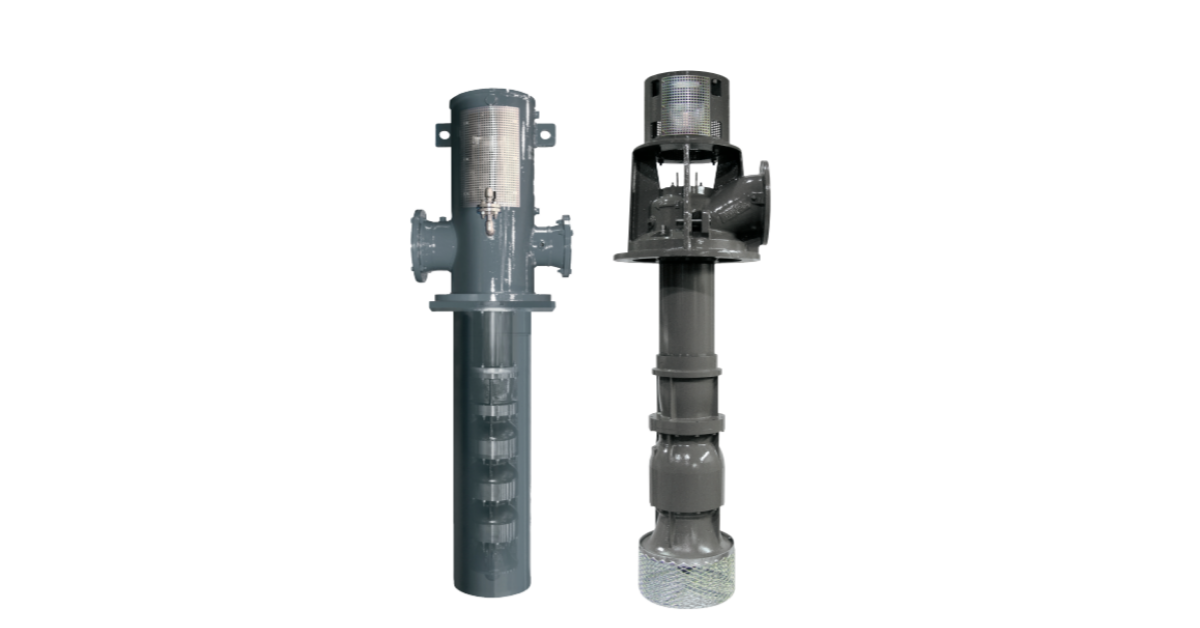
White papersPump design has a significant impact on overall value, from features and configurations to costs, materials and operating parameters. Pump manufacturers can increase customer value while also cutting costs and speeding up time to market. Design to Value processes give companies the opportunity to trigger innovation in existing product portfolios. Some pump manufacturers are adopting enhanced product development processes based on Design to Value principles. The goals of these programs are to: • Enhance product performance based on direct customer input • Utilize best practices to address customer needs and pain points • Standardize designs to encourage modularity and reduce complexity and design variants • Increase use of commercial components and standardize parts across product lines • Pre-engineer bills of materials and component designs for both make-to-order and assemble-to-order products • Optimize product value with a focus on fit-for-purpose materials of construction
White papersValve Sizing – Check-All® furnishes two methods to aid the customer in the selection of the correct valve size to meet their flow requirements; Flow Curves and Cv Factor. Sizing accuracy requires the valve to be fully open, which occurs when the pressure drop across the valve reaches or exceeds three times the spring cracking pressure (five times for 3S valves).
White paperWater hammer can and must be eliminated
White papersCheck valves prevent the hydraulic shock by design By Sheila Kennedy, CMRP, Chemical Processing Contributing Editor INTRO: Water hammer can be so damaging to machinery and dangerous to human health that every effort should be taken to prevent the hazard. Also known as hydraulic shock, water hammer sounds like a mechanical noise and is sometimes perceived to be a valve slamming closed. In reality, it is a phenomenon that occurs in piping systems when fast-moving fluid instantly stops, or reverse flow begins. The sudden change in momentum or direction induces the hydraulic shock wave, creating what sounds like a loud bang.
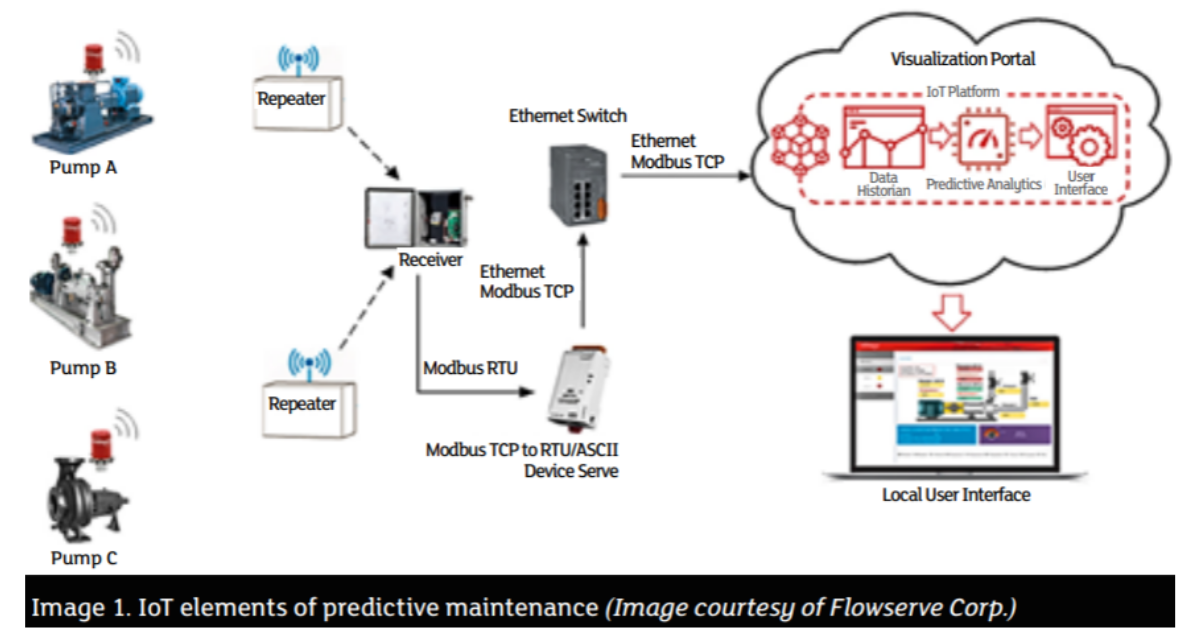
White papersThe Internet of Things (IoT) is a phrase in the limelight. The concept of IoT is extremely appealing, in all forms, to the commercial industry. The technology of IoT has been implemented in various industries globally and it is finally approaching the rotating equipment industry. To fully explain and understand how IoT technology can be implemented to increase mechanical seal reliability, a description of maintenance philosophies is needed. There are three main types of maintenance philosophies in industry today: reactive, preventative and predictive. Currently in the pump industry, and more specifically with mechanical seals, most of the maintenance is either in the reactive or preventative ideologies. This is where the current model of IoT comes into play. IoT is a powerful tool that will enable the industry to progress to a predictive maintenance model. This is accomplished by using advanced technology in several key areas such as device connectivity, data storage, and cutting-edge analytics.

White papersWhat is IIoT? Terms like IIoT (Industrial Internet of Things) and predictive analytics have been buzzwords for some time. But many people seem to have different ideas of what these technologies are, how they relate to one another, and what they can achieve. To strip away the confusion, let’s take a closer look at IIoT and predictive analytics as well as the potential they hold for oil and gas companies, refineries, and petrochemical facilities. First, let’s dive into IIoT. In simple terms, IIoT refers to devices that are embedded with technology which enables them to connect to infrastructure. Common examples include smart hubs that can automatically adjust lighting, air conditioners, heaters, and other devices, depending on when people are likely to need them. Sounds similar to a thermostat, right? But unlike a thermostat, which is set to perform a command once the environment reaches a specific temperature, or an infrared sensor that turns on the lights when someone enters a room, IIoT technology can track behaviors and learn over time. Download this whitepaper to learn more about IIoT and predictive analytics!
White paperThe difference between Input Power (P1) and Output Power (P2)
White papersA common question asked when working with pumps is the difference between Input Power (P1) and Output Power (P2). Both of these values are in units of Power however, they represent two very different things. Download to learn more!
White paper6 Common Causes of Motor Overheating
White papersAn overheating pump motor can be a worrying issue for operators and engineers alike, but like many pump issues, it is usually a symptom that can be traced to a problem in the system. These 6 common causes of motor overheating are a good place to begin when diagnosing a troubled pump system. Download to read more!
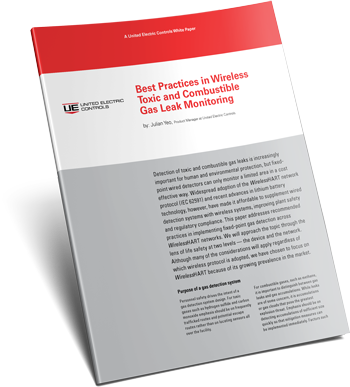
White papersBy: Julian Yeo, Product Manager at United Electric Controls Detection of toxic and combustible gas leaks is increasingly important for human and environmental protection, but fixed- point wired detectors can only monitor a limited area in a cost-effective way. Widespread adoption of the WirelessHART network protocol (IEC 62591) and recent advances in lithium battery technology, however, have made it affordable to supplement wired detection systems with wireless systems, improving plant safety and regulatory compliance. This paper addresses recommended practices in implementing fixed-point gas detection across WirelessHART networks. We will approach the topic through the lens of life safety at two levels — the device and the network. Although many of the considerations will apply regardless of which wireless protocol is adopted, we have chosen to focus on WirelessHART because of its growing prevalence in the market. Download to learn more! Check out Network and Device Considerations for WirelessHART Gas Detection (Part 1)!
White paperHow To Prevent Galvanic Corrosion of Valve Stems
White papersLearn how different metals react, and how corrosion inhibitors can help avoid downtime. By Brittany Kelley, A.W. Chesterton Valve packing is a necessity for plants trying to contain product and meet the latest emission requirements. However, finding a sealing product that works and has longevity can be a challenge. Graphite-based packing can be a good choice for stem sealing when elevated temperature requirements are necessary. This is due to graphite’s ability to maintain its sealing properties at temperatures that cause polytetrafluoroethylene (PTFE) to break down and allow leaks to occur. However, graphite is not an electrical insulator like PTFE; graphite will act as a metal and undergo galvanic corrosion if the environment is right. Download to read more!
White paperUsed to Determine Size and Cost of Condenser Water Distribution Pipes
White papersSwanson Rink, Inc. was hired to design a new data center on the 29th floor of an existing high-rise data center in Los Angeles. See how Mechanical Engineer, Rory Heim, used AFT Fathom to determine the minimum size of the condenser water distribution pipes serving multiple data halls.
White paperHarmonics in Water Applications
White papersThe water industry requires a reliable solution for securing the flow of water and wastewater. Pumping and aeration systems are integral parts of a reliable solution and these systems consume a considerable amount of energy. This energy consumption can be substantially reduced when variable frequency drives (VFDs) are properly introduced into these systems. VFDs, along with many other types of electronics, cause a phenomenon known as power line harmonics. The advantages of using a VFD far outweigh the negative effects of harmonics, but it is important to be aware of harmonics, the potential problems they can cause, and the solutions that are available to mitigate those harmonics. While this paper focuses on VFDs as a source of harmonics, it is important to note that VFDs are not the only source of harmonics in a system. However, VFDs are often the focus of harmonic calculation and mitigation conversations due to the fact that VFDs in water applications may make up a significant portion of the overall power consumption. Examples of VFDs in water and wastewater applications include pumps, blowers, compressors, digesters and conveyors.
White paperSystem philosophy in efficiency optimization
White papersA system approach in efficiency optimization delivers the most rewarding efficiency improvements. This article presents the concept of Efficiency First, where energy saved is regarded as the first fuel, an energy source in itself. It goes on to describe a system philosophy to significantly reducing energy consumption in applications, where the focus is on system efficiency and not only on component efficiency.