
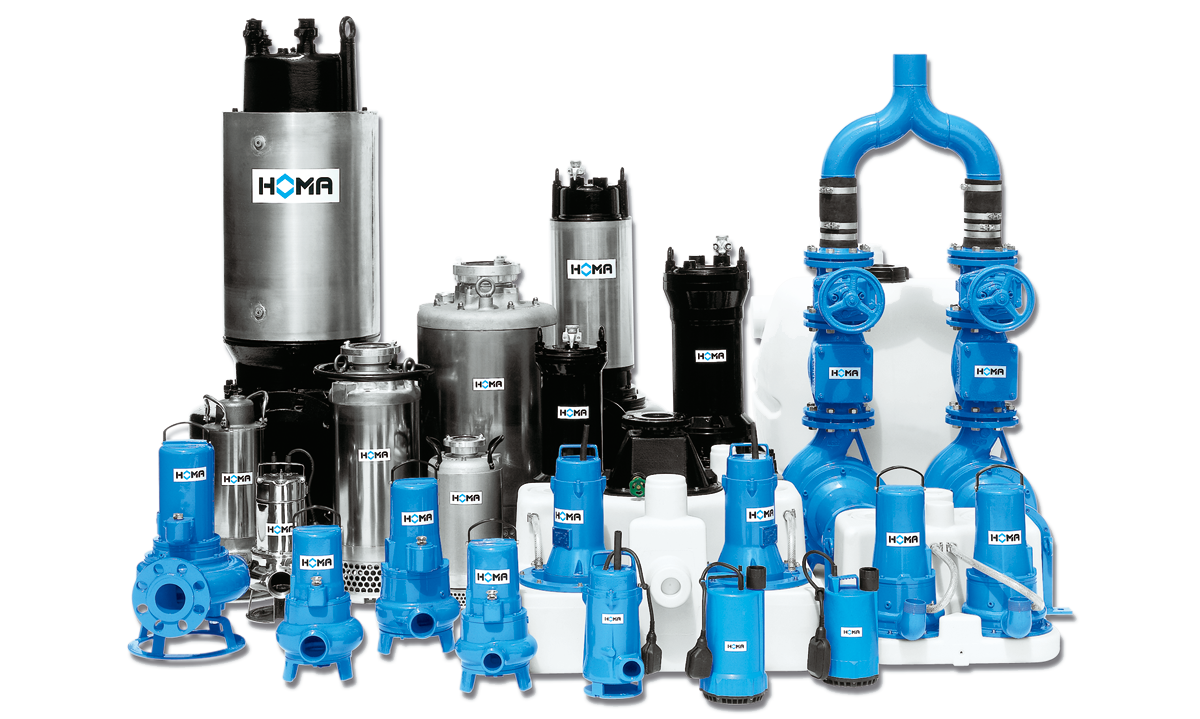
Headquartered in Ansonia, Connecticut, HOMA Pump Technology has served the North American wastewater industry for over 35 years through our network of factory trained and locally committed distributors and service centers. Our 40,000 sq. ft. engineering & test center, workshop, and warehouse facility is fully equipped to help design, build, deliver, and service all your wastewater handling needs quickly and reliably.
Our experienced staff are committed to providing full support; from applications and product selection, to the initial purchase and installation of your equipment, planned maintenance, spare parts sales, replacements and upgrades. For more complex projects and custom product solutions, our German Manufacturing and Technology Center’s electrical, mechanical and hydraulic experts are standing by to assist and innovate.
Downtime is a dirty word, so we specialize in fast deliveries from our over $12M pump and spare parts inventory. 5-7 days is standard lead time for submersible pumps up to 120 HP, with same day delivery possible for emergencies. Retrofit with HOMA, or let us support you with an engineered new installation. Whether your application requires a residential grinder or effluent pump, or you are handling an industrial process stream or municipal wastewater, HOMA builds submersibles that work. Simple. Reliable. Efficient
From HOMA Pump Technology
Articles 22

Products 7
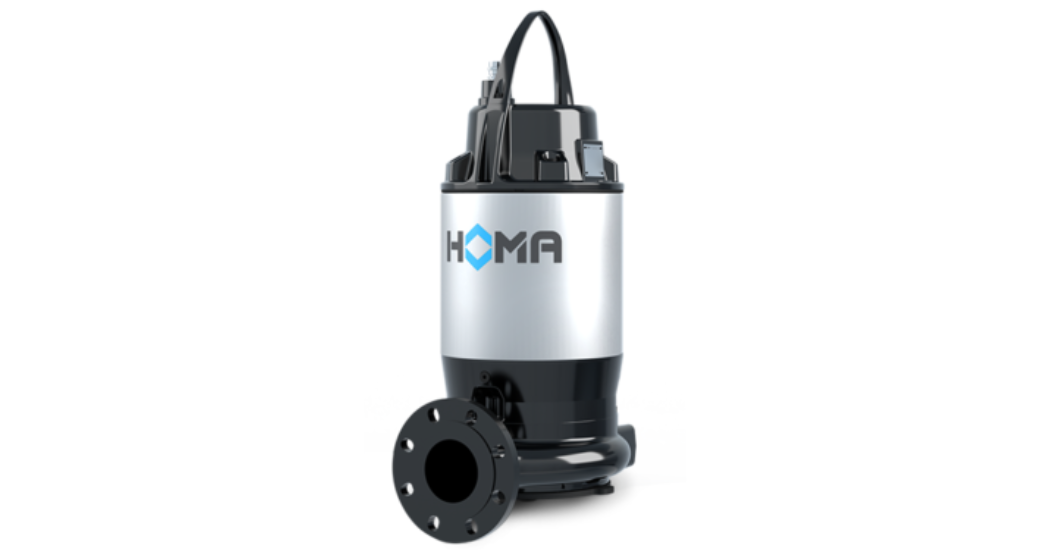
HOMA Pump Technology
OC Series Chopper Pumps
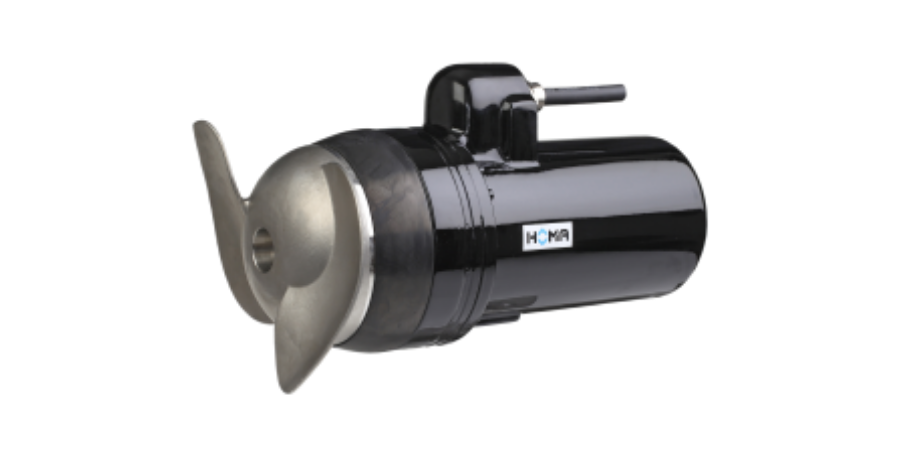
HOMA Pump Technology
HRS Series
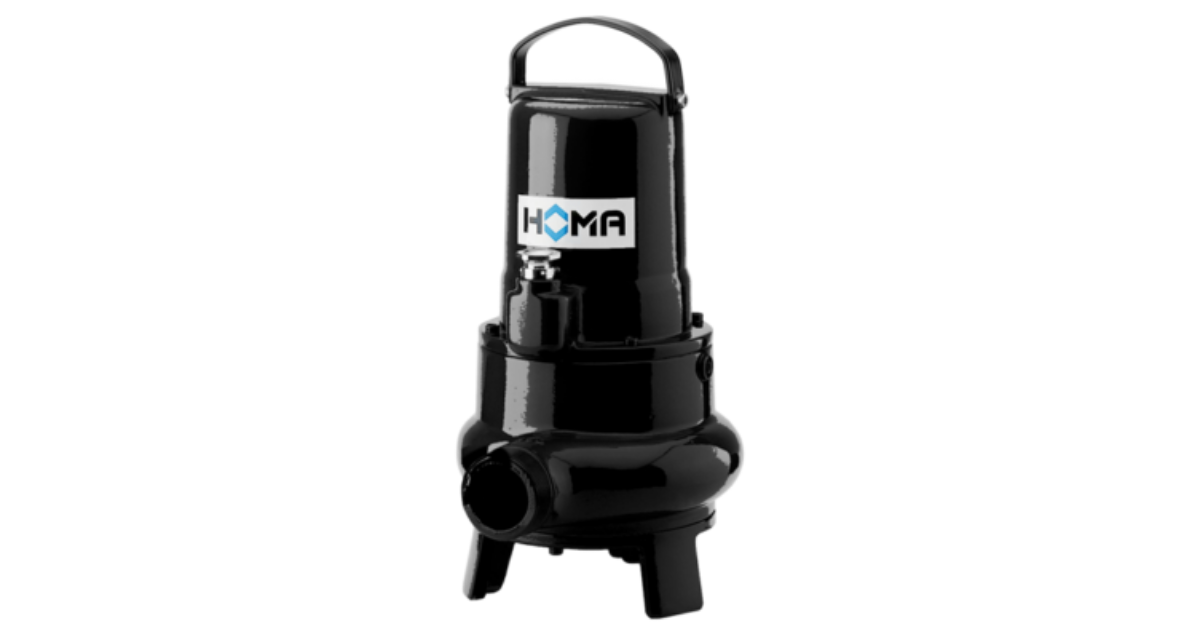
HOMA Pump Technology
TP Series
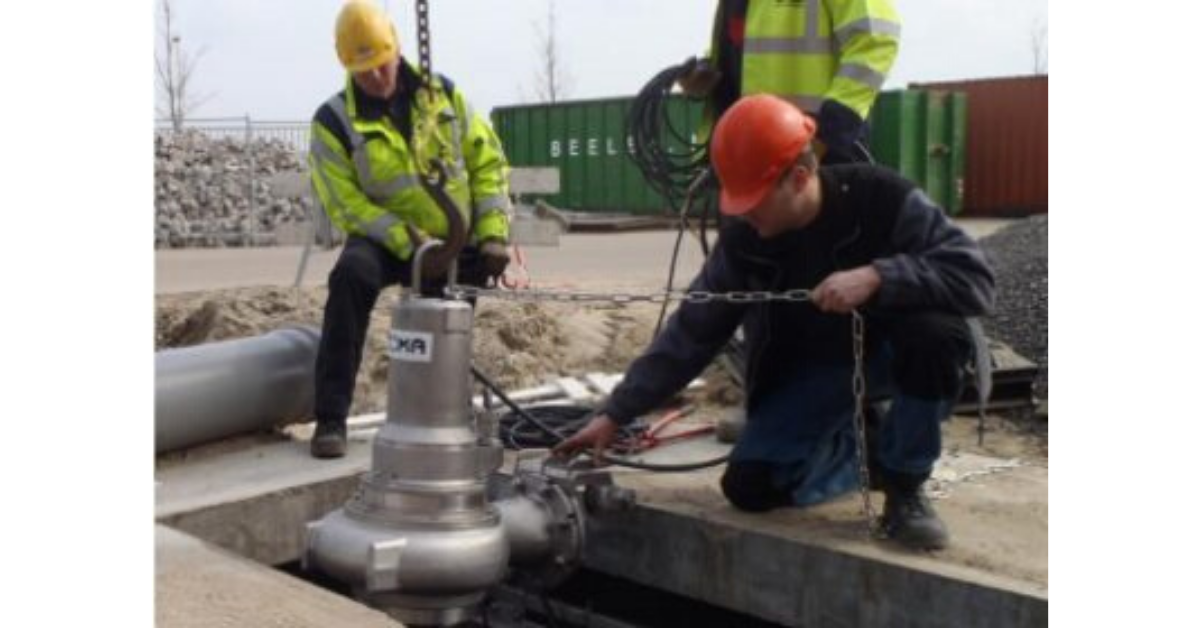
HOMA Pump Technology
C Series Stainless Steel Submersible Pumps from HOMA
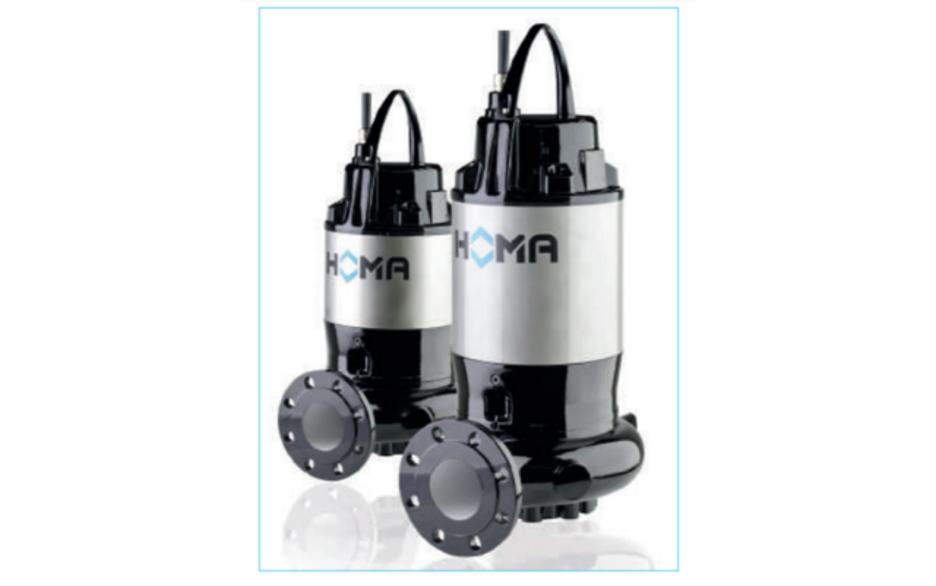
HOMA Pump Technology
The new AMS hydraulics for submersible sewage pumps
HOMA Pump Technology
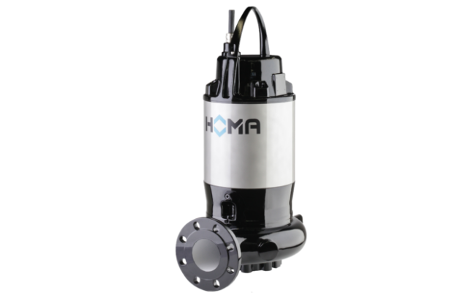
A-Series Waste Water Pump
White Papers
- Pump Maintenance Mistakes ChecklistRegister to download
A pump is an expensive piece of any water system. Maybe not the most expensive, but certainly not the least. However, only a small fraction of a pump’s lifetime costs are the purchase price on day one. Operating and maintenance costs are borne over the life of the pump, and can only snowball with mistakes in maintenance and repair. These are ten examples of mistakes that are easy to make but can lead to huge headaches and huge costs.
- How to Read a Pump Curve (and Why you Want to)Register to download
If you have ever worked with pumps before, be it in an installation, maintenance, or engineering capacity, chances are high you have seen a pump curve. Chances are also high that the first time you saw a pump curve, you had no idea what it meant. That makes sense, because a pump curve is not intuitive at first glance and can be intimidating to someone who is not used to them. However, once you understand some of the basics of curves you will be able to not only understand what they show, but also use them to evaluate a pump’s operation. With this information, you can identify if a pump is meeting its required performance, whether the system is operating as designed, and even prevent pump failures by evaluating if they are operating in a region that may lead to excessive wear and tear. But before we can learn how to use a curve, we have to learn how to read one. In order to talk about pump performance, we need to talk about Flow and Pressure. A pump operating will move a volume of water in a given time (Flow) at a pressure. There are several units of flow that are used, but the most common is gallons per minute (GPM). The most common way to talk about pressure, is what we call “Head.” When talking about the pressure a pump generates, you may hear this referred to as TDH, or Total Dynamic Head. The TDH is the vertical distance (given in Feet in the US) that the pump will push water up. This is very useful when talking about pumping water out of wells, because the depth of the well and the pressure of the pump can both be put in terms of feet. We can convert between psi and feet by multiplying the psi by 2.31. (i.e. 2.31*ft of H20 = psi)
- Impeller Selection Guide for Submersible PumpsRegister to download
When selecting a submersible pump model, the question may arise of what type of impeller is best for the application. Many manufacturers offer a variety of impeller designs to fit differing installations, and choosing the right impeller for the job is an often-overlooked aspect of station design. For non-clog submersible pumps, there are typically closed and semi-open impellers, single and multi-vane impellers, and a style of semi-open, multi-vane impeller referred to as a vortex impeller. HOMA Pump will examine the pros and cons of these styles, as well as common materials of construction.
- Air EntrainmentRegister to download
Air entrainment is the introduction of air bubbles into the pump impeller during operation. It differs from cavitation in that the bubbles are air rather than water vapor. It also differs in that the air bubbles do not collapse in the impeller releasing energy like cavitation bubbles do. Air can be either large coarse bubbles or fine bubbles Both results in a two-phased pumped medium and can damage the pump, but coarse bubbles are more severe. Download this whitepaper to learn more about air entrainment.
- How to Find and Fix RecirculationRegister to download
Identification of recirculation cavitation in the field. By Sound Popping sounds coming from volute are intermittent and inconsistent in both sound level and frequency Sounds begins immediately upon pump startup but may drop to a lower level once the pump is running and stabilized Noise seems to be loudest at the suction fitting (dry pit installation) By Testing Injecting a small amount of air into the suction of the pump reduces or eliminates the noise Raising the wet well level has very little or no effect on the noise Throttling the discharge valve has no effect or may worsen the noise Throttling the suction valve on a dry pit pump has no effect or worsens the noise (Sometimes extreme throttling will suddenly reduce the noise and will be accompanied by a significant loss in performance) Download this whitepaper to learn more about cavitation.
- The difference between Input Power (P1) and Output Power (P2)Register to download
A common question asked when working with pumps is the difference between Input Power (P1) and Output Power (P2). Both of these values are in units of Power however, they represent two very different things. Download to learn more!
- 6 Common Causes of Motor OverheatingRegister to download
An overheating pump motor can be a worrying issue for operators and engineers alike, but like many pump issues, it is usually a symptom that can be traced to a problem in the system. These 6 common causes of motor overheating are a good place to begin when diagnosing a troubled pump system. Download to read more!
Ask HOMA Pump Technology
Questions about a product, a quote or a spec? Send your request and we pass it to the right contact at HOMA Pump Technology.
Loading the request form