

A leader in the pipe flow modeling market, Applied Flow Technology’s (AFT) software is used to analyze, model, and simulate piping and ducting systems. Using powerful solutions and user-friendly interfaces, AFT helps industries around the world design safer, more efficient systems and solve operational problems.
AFT’s products are developed by engineers with extensive experience in the design and construction of piping systems and the development of analytical modeling methods.
For information, visit www.aft.com or contact one of our 70 international Channel Partners.
See All Content from Applied Flow Technology!
From Datacor, formerly AFT
Articles 127


Products 7

Datacor, formerly AFT
AFT xStream

Datacor, formerly AFT
Settling Slurries (SSL) An AFT Impulse Add-on Module

Datacor, formerly AFT
Automated Network Sizing (ANS)
Datacor, formerly AFT
AFT Impulse – Waterhammer & Surge Analysis Software

Datacor, formerly AFT
AFT Arrow
White Papers
- Arrow Powers Gas Turbine Analysis at Fern EngineeringRegister to download
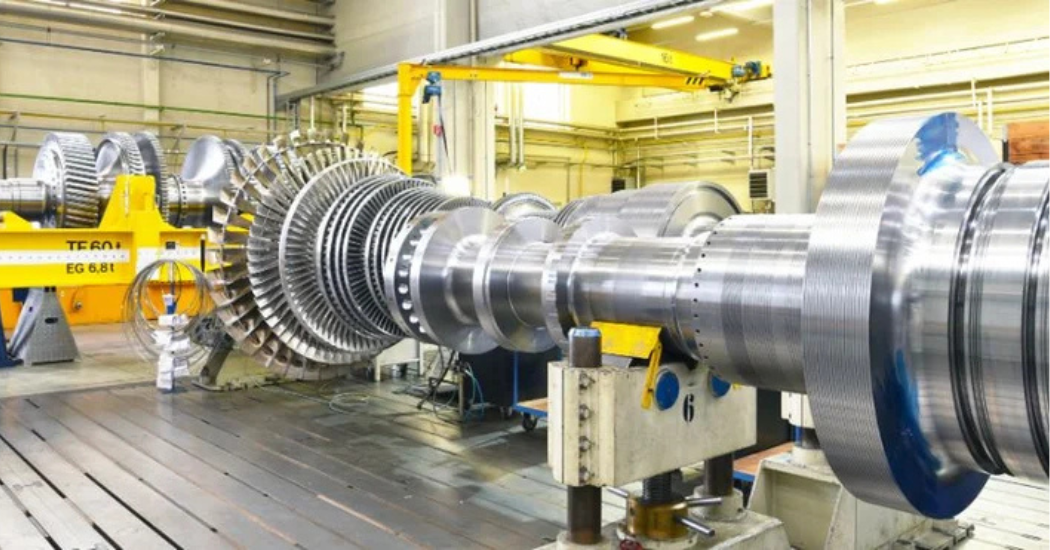
Fern Engineering, Inc. was contracted by a major refinery to reduce the exhaust gas temperature variations of their gas turbine fleet. According to Hector Bourgeois, Fern Engineering President, the exhaust temperature variations, better known as exhaust gas temperature spread or EGT spread, drastically influence the life of turbine components and operational hardships. Gas turbine manufacturers usually establish a high limit for this spread that, if exceeded, sounds an alarm or can shut the gas turbine down. Ideally, the EGT spread would be low for optimal life and reduced downtime.
- ENKA Designs a State-of-the-Art District Heating System for Hamburg’s CHP PlantRegister to download
Datacor Fathom provided the best solutions in terms of both heat transfer and pressure loss calculations.” – Kerem Algüzey, ENKA Industry: Power Generation Region: Hamburg, Germany Focus: District heating system optimization + validated thermal and hydraulic design Kerem Algüzey, design engineer at ENKA Insaat ve Sanayi A.S., used Datacor Fathom to simulate the central heating cycle to inform the design of the hydraulic thermal system for the Dradenau Combined Heat and Power Plant under construction in Hamburg, Germany. PROBLEM This state-of-the-art facility will produce 180 MW of electrical capacity and an additional 260 MW of district heating utilizing multiple heat sources including waste heat from industrial processes and a natural gas power plant. Datacor Fathom was used to size pumps, heat exchangers, and control valves, and to validate line sizing to ensure that piping was within design requirements for the system.
- LyondellBasell Identifes & Addresses Slurry Deposition in Polymer Cooling SystemRegister to download
“The original design relied on simplifying assumptions in another hydraulic modeling tool, the limitations of which were proven after an analysis with AFT Fathom’s SSL module.” – Rajitha Papagari, LyondellBasell Problem LyondellBasell engineer, Rajitha Papagari, performed a reliability study on a polymer slurry cooling system used to maintain a stable temperature in a reactor, critical to maintaining product quality.
- Chicago Bridge & Iron LNG Cooling System Surge AnalysisRegister to download
“[Datacor Impulse] proved to be both easy to model and easily understandable as it relates to what was actually taking place during valve and pump transients.” Chicago Bridge & Iron’s (CB&I) Process Engineering Division was tasked with developing the design for a gasification system serving an LNG off-loading terminal. An innovative and energy efficient approach was taken utilizing waste heat from a nearby power plant. A key criterion in the design was to insure the new, interconnecting system did not compromise the mechanical integrity or operation of the plant cooling system.
- LNG Loading Emergency Shutdown Research ProjectRegister to download
With growing climate concerns, the world looks to natural gas to as a clean way to meet energy demands. Liquefied natural gas (LNG) is liquefied by cooling the gas to -160°C or below (<-256°F), loaded into special tankers for transport, then turned back into gas at its next terminal. The LNG loading process occurs through loading arms, constructed of expensive low-temperature alloys for cryogenic operation and designed to consider the moving vessel the arm is attached to. An LNG terminal might have two to five loading arms for different purposes. In an emergency shutdown, flow through these arms must be suddenly halted by closing a sequence of valves, opening vent valves, and tripping transfer pumps.
- Better Models Lead to Better Business OutcomesRegister to download
As the chemical industry enters 2026, growth expectations remain modest. After a year marked by tariffs, geopolitical instability, and weakened consumer confidence, many of the same pressures continue to shape market conditions. Forecasts suggest global chemical market growth of approximately 2% in 202 —roughly in line with 2025. In this environment, chemical manufacturers are closely monitoring shifting customer priorities, regulatory developments, and broader economic signals. Leaders are focused on navigating uncertainty while maintaining financial discipline, preserving cash, and selectively delaying major capital investments until markets stabilize.
- Powering What’s NextRegister to download
Power generation is experiencing one of its fastest growth periods in decades. Rising electricity demand is putting unprecedented pressure on existing generation, transmission, and distribution infrastructure, testing system resilience and reliability. The rapid expansion of data centers and AI applications, accelerating industrial electrification to support decarbonization goals, and increased residential and commercial consumption are collectively driving a historic surge in power demand. By 2035, the power generation and demand landscape will look materially different. Deloitte projects that the US electricity demand will be 26% higher than today. Data centers alone are expected to consume up to 176 GW by 2035—nearly five times current levels. While smaller in absolute scale, industrial electrification is also expected to add approximately 25 GW of incremental demand.
- LNG Executive BriefRegister to download
By Ana Khanlari, PhD | Engineering Software Group At A Glance State of the global LNG industry LNG’s role in energy security and the energy transition Operational, safety, and ESG challenges across the LNG value chain How digital simulation strengthens LNG decision-making How Datacor supports LNG operators with proven engineering tools
- Transient evaluation of pump trips and non-return valves in a large cooling water systemRegister to download
This study examines the transient behavior of pump trips and non-return valve closures in a petrochemical plant’s cooling water system. The system consists of five pumps supplying 100 000 m³/h at 450 kPa, with hydraulically actuated non-return valves and surge towers. Water hammer simulations were conducted to evaluate valve closure rates, mechanical integrity and operational stability. Rapid valve closures prevent reverse rotation but increase valve stress, whereas slower closures risk re-energization complications and plant trips. A closure time of 6 – 12 seconds is recommended to mitigate risks. Findings provide insights into balancing several competing factors such as preventing pump damage, preventing valve damage, minimizing overcurrent trips, and ensuring reliable cooling system performance.
- BEP Pump System Optimization Study of a Canola Oil SystemRegister to download
Ishwar Dhere, Process Engineer with Stantec Resourcenet India was tasked with analyzing estimated pump head, normal operating line velocities, and pressure analysis for a new canola oil processing system. The system consists of multiple pumps, atmospheric tanks, vacuum tanks, hydrodynamic reactors, heat exchangers, centrifugal separators, bleaching and basket filters, strainers, mixers, and control valves.
- Emissions Control System Energy Reduction with AFT ArrowRegister to download
An emission control system was being redesigned by Orbital Engineering, Inc. to incorporate Variable Frequency Drive (VFD) fan systems to improve system efficiency in light of rising process demands. The existing design consisted of two 7,500 hp (5,600 kW) damper-controlled fans, two baghouses, and two spray dryer absorbers. When the system was constructed, one of these flow paths was intended to serve as a standby system, but increased process demands led to both subsystems being used concurrently and fully utilizing maximum installed capacity at times.
- Selecting Pump Upgrades and Operating Modifications for Existing Chilled Water SystemRegister to download
Problem Natraj Arjunan, engineer at L&T Technology Services in Chennai India, was tasked with reviewing and simulating an existing chilled water system to diagnose system issues and recommend design and operational improvements accordingly. Four identical cooling systems needed pump replacements, creating an opportunity for system improvements. The client did not expect any change to the pump specification or the system since the system had been running for 20+ years without any change in cooling requirements.
- AFT Fathom used to Model Central Heating Cycle of a State-of-the-art Combined Heat and Power PlantRegister to download
Kerem Algüzey, design engineer at ENKA Insaat ve Sanayi A.S., used AFT Fathom to simulate the central heating cycle to inform the design of the hydraulic thermal system for the Dradenau Combined Heat and Power Plant under construction in Hamburg, Germany. This state-of-the-art facility will produce 180 MW of electrical capacity and an additional 260 MW of district heating utilizing multiple heat sources including waste heat from industrial processes and a natural gas power plant. AFT Fathom was used to size pumps, heat exchangers, and control valves, and to validate line sizing to ensure that piping was within design requirements for the system.
- Improved Method of Estimating Steam Hammer LoadsRegister to download
Recent research has shown that a commonly used method to estimate transient pipe forces does not reliably yield conservative predictions. As the topic of transient compressible flow is quite complex, engineers should be very cautious in applying simple algebraic formulas to estimate loads for design use. With that caution in mind, some engineers would still like to have a simple method available. This paper develops a new method that offers an improved way of estimating transient pipe loads. Comparisons are made against numerical simulations for a realistic power station piping example using real gas models for the steam properties and pipe friction. The comparisons are surprisingly good for this example. The improved method provides better estimates than methods commonly used today and is recommended as a replacement for such methods. Engineers should consider using the new, improved method as a preliminary design tool and for screening purposes. Engineers should take extra care in using the new method for detailed design purposes.
- A Critique of Steam Hammer Load Analysis MethodsRegister to download
One of the key assumptions in modern steam hammer load analysis is based on an incomplete understanding of steam wave behavior. Compression waves generated after a valve closure steepen much more quickly than previously thought. The resulting forces generated on pipe runs separated by elbows can be significantly higher than those predicted using current methods. To be more specific, current methods may give unconservative pipe force estimates – potentially resulting in unsafe designs. Using a more complete understanding of gas wave speed, quantitative examples are given which show the larger forces which occur as a result of wave steepening. Suggestions on how to improve load estimation are discussed.
- Accurately Predict Transient Fluid Forces in Piping Systems, Part 2: ApplicationsRegister to download
Part 1 of this series discussed in detail how to accurately calculate the reactions induced by pressure transients that travel at acoustic velocity in either liquid or gas piping systems. Part 2 applies these methods to a variety of realistic examples to further illustrate their use and to demonstrate areas in which traditional or simplified methods may impart significant error.
- Accurately Predict Transient Fluid Forces in Piping Systems, Part 1: FundamentalsRegister to download
Changes in the operation of piping systems – like valve closures or pump starts – propagate pressure waves that travel at acoustic velocity throughout the fluid. These pressure waves have considerable effect on forces, potentially generating dynamic loads upwards of 10,000 lbf (50 kN) in common configurations. Some estimation methods used in industry for estimating transient forces neglect terms that may be important in some cases. Calculating forces due to these transients without simplification for transient liquid or gas flow is presented here in detail.
- Used to Determine Size and Cost of Condenser Water Distribution PipesRegister to download
Swanson Rink, Inc. was hired to design a new data center on the 29th floor of an existing high-rise data center in Los Angeles. See how Mechanical Engineer, Rory Heim, used AFT Fathom to determine the minimum size of the condenser water distribution pipes serving multiple data halls.
- Wastewater Treatment Plant Resolves Downtime Issue CASE STUDY and Saves Up To $600,000 with AFT Arrow™Register to download
Brown and Caldwell were hired to design the reliability and process improvements project at a wastewater treatment plant. This plant is the linchpin of the wastewater treatment system providing a backup to other neighboring plants in cases of heavy flows, construction related bypassing, or emergencies. See how Maren Deal used AFT Arrow for the design and planning of the upgrades to the plant’s aeration system, as well as for the optimization of the existing operation. Figure 1: The original aeration system which includedthree blower facilities with a total of 11 blowers thatprovide air to 28 aeration tanks around the plant.The yellow lines on the map show the air manifoldconnecting all of the air piping and blower facilities.
Ask Datacor, formerly AFT
Questions about a product, a quote or a spec? Send your request and we pass it to the right contact at Datacor, formerly AFT.
Loading the request form