Learn
White Papers
Technical papers and guides from the companies that publish here, free to download.
Technical papers and guides from the companies that publish here, free to download.


554 white papers
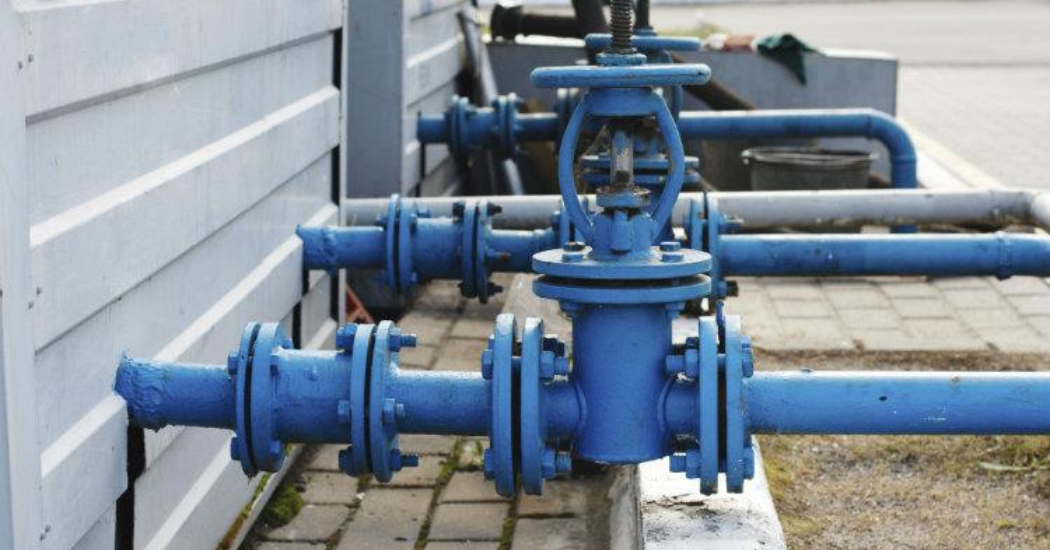
Like your car, your body and nearly every appliance you own, control valves require regular maintenance to continue working efficiently. However, due to budget and time constraints, we don’t always give our valves the TLC they need to perform at their best. Unfortunately, ignoring pressure reducing valves can mean serious issues go unnoticed and often lead to expensive repairs. By scheduling regular maintenance, you can catch problems before they become costly. To make your life easier, Singer Valves has prepared a checklist for your scheduled valve maintenance.
Rentschler Biotechnologie GmbH has built a reputation in the biopharmaceutical-manufacturing industry by becoming what is known as a contract manufacturing organization (CMO), or one that specializes in creating products for large conglomerates that need to be manufactured on a smaller scale or within a very short time frame. This biopharma manufacturer utilizes production systems that offer a wide range of liquid handling capacities and has found that those that operate most effectively are outfitted with Quattroflow 1200 Single-Use Series Quaternary Diaphragm Pumps. Single-use versions of Quattroflow QF1200 pumps help this biopharma manufacturer maximize the speed-to-market capabilities of the biopharmaceuticals that it produces.
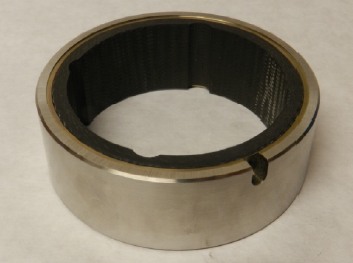
Continuous‐Fiber Reinforced CeraComp® Bearing Assembly for Flowserve Sier‐Bath Asphalt Pump Asphalt pumps typically utilize shaft bearings machined from sintered silicon carbide (SiC) primarily due to the hardness of SiC, which allows the components to withstand wear during the pumping of aggregate solid media. Unfortunately, the limited dry‐running performance of SiC and its catastrophic nature of failure during thermal and/or mechanical shock events relegates its use to systems with minimal loads, limited upset conditions, and constant lubrication. In asphalt pumps, SiC bearings have been shown to be the ‘Achilles Heel’ of the system, commonly causing pump down‐time and excessive overhaul costs due to catastrophic bearing failure. To increase the efficiency of these highly‐problematic asphalt pumps, a ceramic matrix composite (CMC) was developed by Lancer Systems and installed into a Flowserve Sier‐Bath Twin Screw Asphalt Pump operating at a large petroleum refinery.
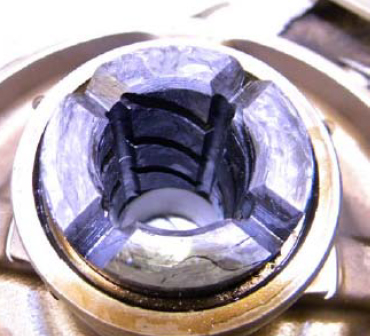
Structurally intact ceramic matrix composite (CMC) bearing after four-stage testing and pump disassembly Sealless pumps use sleeve bearings typically machined from carbon graphite or sintered silicon carbide (SiC). The hardness of these materials allows them to withstand wear during the pumping of aggregate solid media. However, the limited dry-running performance of carbon graphite relegates its use to systems with minimal loads and constant lubrication. While SiC bearings have excellent tribological performance, wear resistance and chemical resistance, they often suffer from catastrophic brittle fractures as the bearings cannot absorb shocks and vibrations encountered during pump upset conditions. In 2014, Engineers at the JX Nippon Chemical Texas Inc. in Pasadena, Texas, initiated performance testing of ceramic matrix composite (CMC) bearings reinforced with carbon fiber. The company wanted to reduce downtime caused by frequent replacement of OEM monolithic carbon graphite bearings, which had consistently failed as a result of vibration fractures during cavitation and dry-run conditions. The Engineers at JX Nippon believed the CMC’s thermal and mechanical fracture resistances would increase bearing resiliency during pump upset conditions. Download the whitepaper to learn more about the rigorous testing and results that were revealed after four phases of testing.
The chemical process industry uses glass-lined equipment due to its corrosion resistance against acids, alkalis, and other chemicals, as well as its smooth, anti-stick surface which allows for easy cleaning and sterilization. Glass-lined equipment is also chosen for a variety of chemical processes, such as fine aggressive chemicals, pharmaceutical products, agricultural products, polymers and metallurgical products, due to its tendency to prevent contamination, thereby eliminating the possibility of unwanted reactions in the chemical process. Download this whitepaper, which discusses: where glass-lined equipment is used; why it is being used; downtime costs for gasket failure; common causes of gasket failure and how to avoid them; a special PTFE envelope gasket fitted with high compressible sealing inserts developed for glass lined flanges.
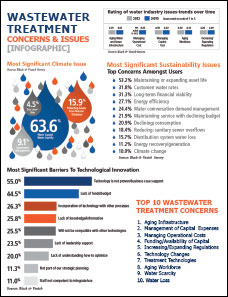
If you are wondering what is keeping professionals in the wastewater industry ‘up at night’, this infographic paints a picture of the major concerns. The infographic explains what is believed to be the most significant climate issues, most significant sustainability issues, the major barriers to technological innovation, and a rating of water industry issues as they trended over time. Download this infographic to see the Top 10 Wastewater Treatment Concerns.
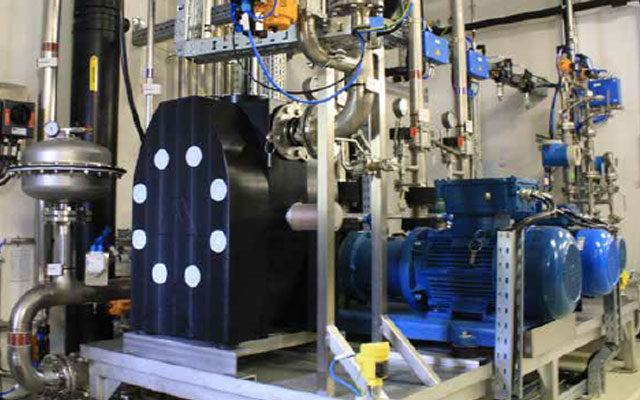
Several industrial processes, whether it be the refining of petroleum products, manufacture of pharmaceuticals or the treatment of wastewater, may require the use of dangerous or hazardous chemicals. Such hazardous chemicals include strong acids and caustics, like hydrogen chloride (HCl), hydrogen fluoride (HF), nitric acid (HNO3), sulfuric acid (H2SO4), potassium hydroxide (KOH) and sodium hydroxide (NaOH). There are also dangerous solvents, like toluene, a colorless, water-insoluble liquid that can cause a series of severe reactions in the body when exposed to humans, and xylene, a slightly greasy, colorless flammable liquid with some level of acute toxicity. In contrast to being dangerous, these substances are also invaluable in the manufacture of thousands of consumer products and the production of components that are used to create consumer goods or facilitate industrial processes. The challenge for manufacturers and users of these dangerous chemicals is to construct, handle, and transfer them in a way that eliminates any chance for their release into the atmosphere where they can harm humans or the environment. This whitepaper illustrates how one type of pumping technology—positive displacement (PD) solid-body plastic air-operated double-diaphragm (AODD) pumps—possesses the design and construction features that are necessary to guarantee full containment of dangerous chemicals, while also offering working characteristics that enable the highest level of operational efficiency to be achieved.
For decades, the U.S. Department of Energy has issued market-changing industrial electric motor regulations to improve efficiency. The most recent rules, which have gone into effect over the past two years, impact most equipment manufacturers and users. Pump manufacturers, in particular, need to understand the impact motor speeds, operating speeds, inrush currents, motor size and motor configuration have on their pump designs and product development. This webinar included a review of current U.S. Department of Energy regulations for Small and Integral Horsepower Electric Motors. One of our presenters, Peter Gaydon, Director of Technical Affairs with the Hydraulic Institute, discussed the new rules for clean water pumps, their effective date, the intended energy savings goals, and other considerations which will directly affect the sale and marketing of clean water pumps.
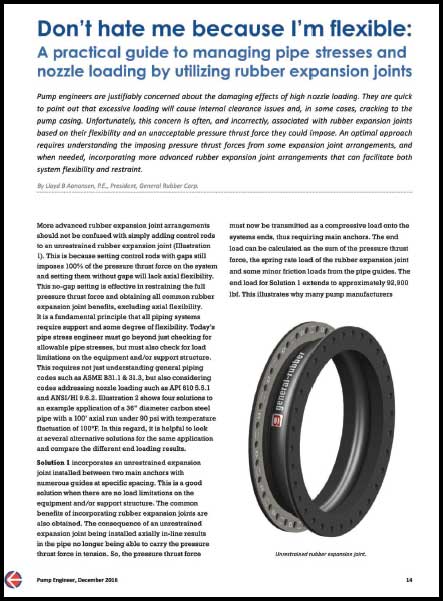
A Practical Guide to Managing Pipe Stresses and Nozzle Loading by Utilizing Rubber Expansion Joints Pump engineers are justifiably concerned about the damaging effects of high nozzle loading. They are quick to point out that excessive loading will cause internal clearance issues, and in some cases, cracking to the pump casing. Unfortunately, this concern is often, and incorrectly, associated with rubber expansion joints based on their flexibility and an unacceptable pressure thrust force they could impose. An optimal approach requires understanding the imposing pressure thrust forces from some expansion joint arrangements, and when needed, incorporating more advanced rubber expansion joint arrangements that can facilitate both system flexibility and restraint.
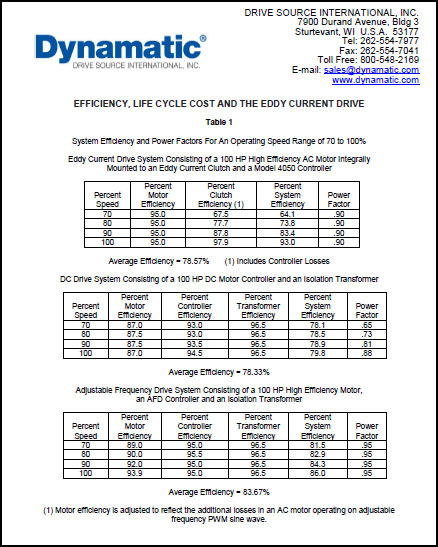
There is great emphasis on efficiency in the world today, and the manufacturers and users of adjustable speed drives are certainly not exempt from this concern. Determining the best drive for a particular application can be a time consuming process which should include not only evaluation of performance and acquisition cost but also the cost of ownership. In a great many applications, the Eddy Current drive is one of the strongest contenders, but it is sometimes discarded without a thorough investigation into all of the elements which make up the total cost of ownership. This whitepaper discusses: evaluating life cycle costs eddy current drive characteristics drive system acquisition, installation, and operating costs annual savings comparisons power factor downtime, maintenance, and repair costs
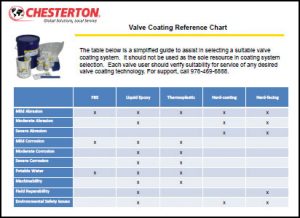
It’s no secret that the use of coatings in valves extends service life and helps improve operational efficiency as part of the pumping system, especially when used in conjunction with pump coatings. The issue, however, is that not all coatings are created equal – so the correct identification and specification of a coating based on system operating conditions is critical to its success. Complete the form below to Download this Valve Coating Reference Guide, which will help you identify which coating should be specified for your specific valve operating conditions.

ASHRAE is the industry organization that sets the standards and guidelines for most HVAC-R equipment. They have published a chart that lists estimated life expectancy for various HVAC equipment. Complete the form below to download the ASHRAE chart of HVAC Equipment Life Expectancy. The chart includes a list of median life expectancy for the following types of equipment: air conditioners heat pumps boilers burners furnaces unit and radiant heaters air terminals air washers ductwork dampers fans coils heat exchangers reciprocating compressors packaged chillers cooling towers air-cooled and evaporative condensers insulation pumps reciprocating engines steam turbines electric motors and motor starters electric transformers controls valve actuators ASHRAE, founded in 1894, is a global society advancing human well-being through sustainable technology for the built environment. The Society and its more than 55,000 members worldwide focus on building systems, energy efficiency, indoor air quality, refrigeration, and sustainability. Through research, standards writing, publishing, certification and continuing education, ASHRAE shapes tomorrow’s built environment today. For additional info about ASHRAE, please visit www.ashrae.org.