White paperConsiderations for Selecting an Explosion Proof Pump
White papersExplosion prevention is a primary safety concern for many industries that depend on electrically driven pumps. In the case of chemical plants, refineries, and hydrocarbon processors, there exists high potential for process and other liquids that emit explosive vapors. A deadly and destructive explosion is then only waiting for a tiny spark or sufficiently hot surface to ignite. In the case of mining and oil and gas exploration, the potential fuel source for an explosion is escaping underground gas found in subsurface pockets frequently under extreme pressure. Fortunately, electrical equipment, including submersible pump motors, can be designed and manufactured to prevent them from becoming an ignition source in these hazardous environments. Download below to read more
White paperPump Considerations For Wastewater Operators
White papersThe idea of putting an electric motor under water makes most people uneasy, but slowly over the last 50 years, the use of submersible pumps has grown throughout North America. Industries here have evolved in their ways of making choices of pumping equipment. There is a trend toward submersibles pumps over other options like self-priming or vertical pumps. Years of improvements in sealing systems design, manufacturing and monitoring have eased the submerged motor fears. In addition, developments in the use of slide rail systems have greatly facilitated the task of maintaining submersible pumps for waste water applications. While the transition to using submersible pumps has been slow, it continues to be a more acceptable way of pumping; especially for wastewater treatment operators, who utilize submersible pumps in a variety of applications throughout their plants. Download below to read more from BJM Pumps.
White paperPump Troubleshooting Guide
White papersAre you experiencing any of these issues with your pump? Pump Does Not Prime Pump Ceases to Deliver Liquid After a Time Pump Leaking at Mechanical Seal Housing Pump Takes Excessive Power Not Enough Liquid Pump Bearings have Short Life Not Enough Pressure Pump Vibrating or Overheating Download this guide to determine what might be causing the issues listed above. Pump troubleshooting is a process, but with the help of ALLIGHTPRIMAX, you can take steps to address your pump problem.
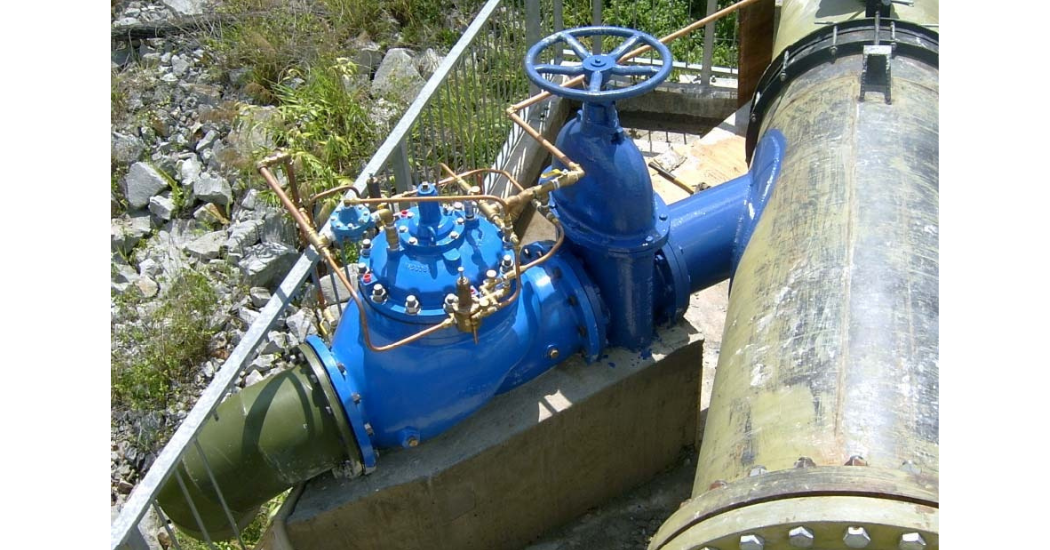
White papersPipe bursts as a result of transients and surges within a piping network are very common problems throughout the world. Not only are the maintenance costs of these repairs extremely expensive, but when you add in possible litigation for third party damages, combined with the potentially significant value (cost) of the lost water, you can quickly realize the significance of what may appear simply as “another pipe burst”. It is common for water utilities that serve a typical population base of 1–1.5 million people to quote pipe burst occurrences between 500– 1,000 incidents per year. Maintenance repair costs quoted at thousands of US dollars per incident are common. Surges, or transients, are the result of a rapid change in liquid velocity within a pipeline. This stored energy – released as pressure – can destroy fittings, pipes, valves, instrumentation and pumps. The associated pressure waves travel the length of the pipeline (upstream or downstream), of the offending device (pump, valve, etc.) and then reverse direction. The waves move at a constant speed until they meet a boundary or barrier. The reflected and incident waves superimpose to produce a more complicated wave pattern that includes double-peaks and double- troughs. The consequence of inattention or improper protection from surges or transients could be a “pipe burst” or equipment failure and result in damage, water loss or litigation. Transients, surges and the resulting pipe bursts can be caused by numerous events. Loss of power at a pump station, pump station PLC malfunction, single-speed pump motors without adequate pump control valves, or the rapid closure of gate valves or butterfly valves within the distribution system are a few of the more common causes. There are a variety of mitigating solutions that can result in a significant decrease in the number and frequency of pipe bursts within a water utility’s distribution or transmission system. This paper focuses on several solutions and offers a brief explanation of the applications and intricacies of the associated equipment. An overview is also given of non-diaphragm operated control valve solutions, along with background information that includes the advantages and disadvantages of the different types of equipment. Note: This paper does not deal with the analysis of transients or surges (other than a brief overview), as there are numerous experts in this field and substantial information and engineering expertise available. Just fill out the form below and the download link will appear on this page after you have submitted the completed form.
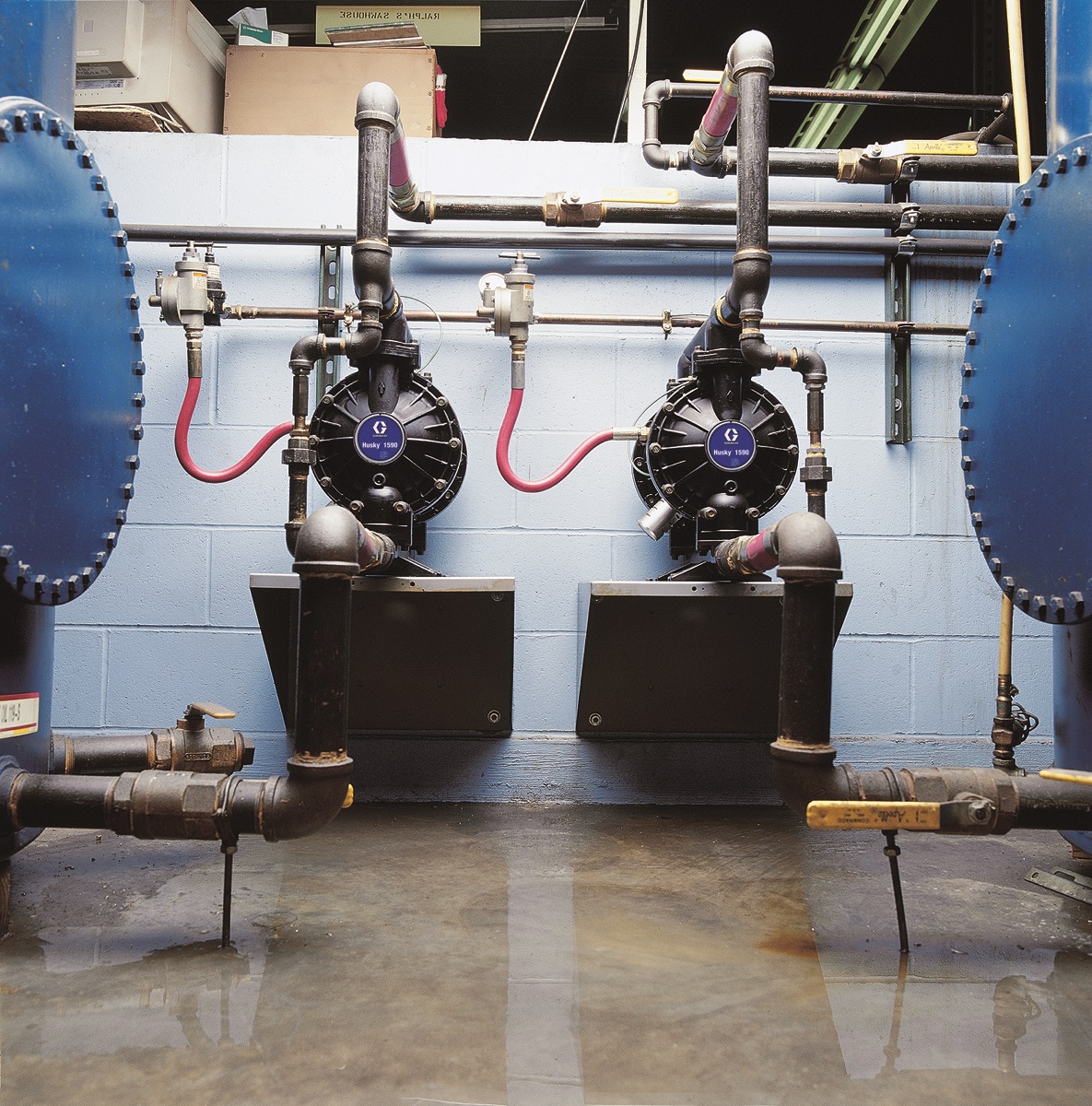
White papersAir-operated double diaphragm pumps (AODD) are preferred in transfer applications due to a simple design that makes them easy to operate and cost effective to repair. To achieve top performance, end users must install and operate these pumps correctly. In a matter of minutes, common issues can be corrected with the right information. This Guide provides 6 Quick Steps that can help you fix common problems during installation and operation of your AODD pumping equipment.
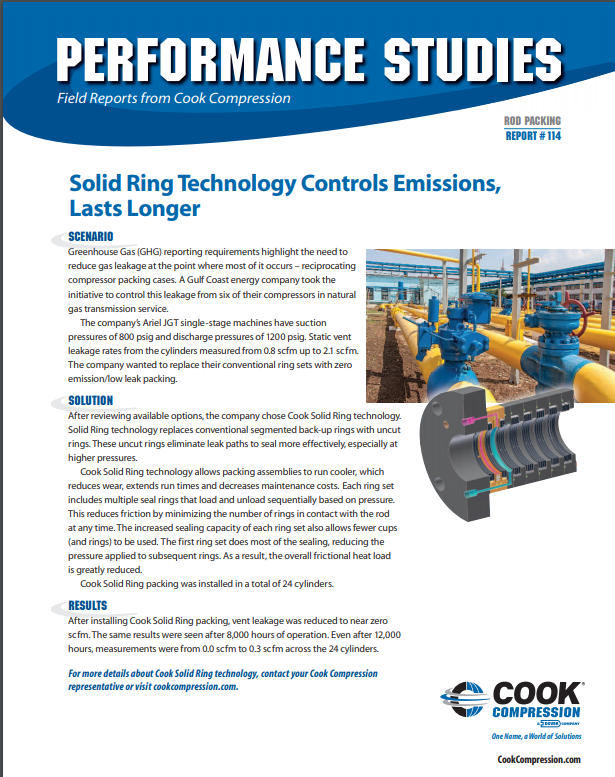
White papersGreenhouse Gas(GHG) reporting requirements highlight the need to reduce gas leakage at the point where most of it occurs – reciprocating compressor packing cases. A Gulf Coast energy company took the initiative to control this leakage from six of their compressors in natural gas transmission service. The company’s Ariel JGT single-stage machines have suction pressures of 800 psig and discharge pressures of 1200 psig. Static vent leakage rates from the cylinders measured from 0.8 scfm up to 2.1 scfm. The company wanted to replace their conventional ring sets with zero emission/low leak packing. Download below to read more
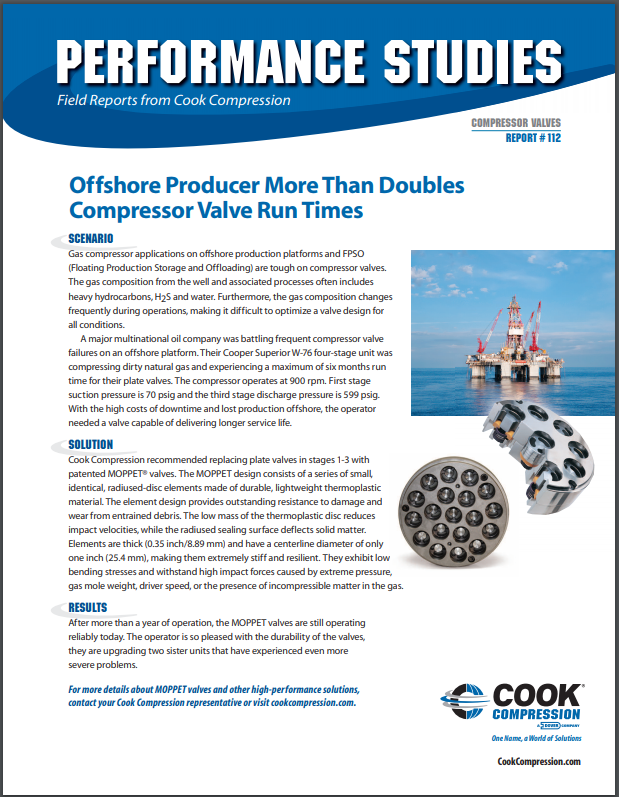
White papersGas compressor applications on offshore production platforms and FPSO (Floating Production Storage and Offloading) are tough on compressor valves. The gas composition from the well and associated processes often includes heavy hydrocarbons, H2S and water. Furthermore, the gas composition changes frequently during operations, making it difficult to optimize a valve design for all conditions. A major multinational oil company was battling frequent compressor valve failures on an offshore platform. Their Cooper Superior W-76 four-stage unit was compressing dirty natural gas and experiencing a maximum of six months run time for their plate valves. The compressor operates at 900 rpm. First stage suction pressure is 70 psig and the third stage discharge pressure is 599 psig. With the high costs of downtime and lost production offshore, the operator needed a valve capable of delivering longer service life.
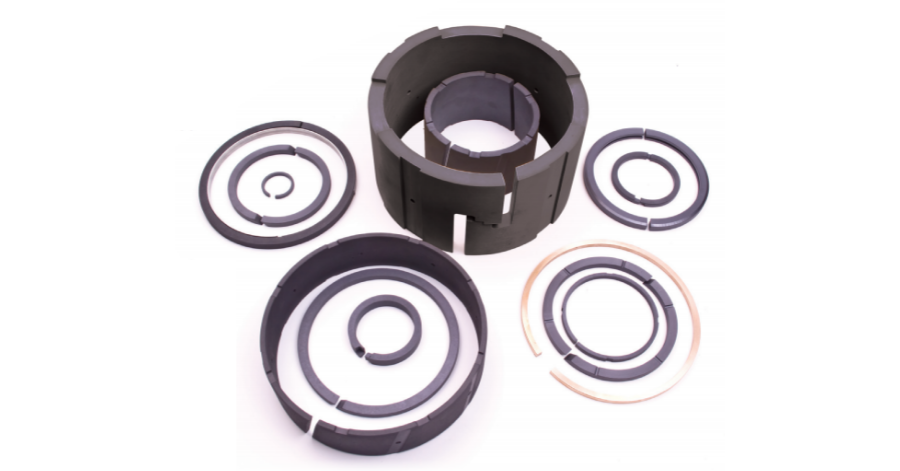
White papersA major US pipeline transmission and storage company in the Great Lakes region was struggling with decreasing service life for rings, riders and packing due to debris from a plugged inlet scrubber, lubrication issues from neglected pumps, liquids from a wet inlet and worn cylinders. The pipeline company had been using carbon-filled PTFE products from another supplier, with ring life worsening by the day. Download below for the solution.
White paperIsomag seals increase the reliability of wench gearboxes in offshore applications.
White papersAfter having success with Isomag’s in top drive applications, NOV decided to use the Isomag MP-V3 to replace the industry standard labyrinths on wench gearboxes. The upgrade proved worthwhile when leaks and offshore environment contamination no longer occured. While effectively protecting the bearings these older style Isomags were found to run at relatively high face temperatures, concerning the end users. Nonetheless the V3 was still the best option when compared with competitive technology and over 100 units were purchased in 2011-2012. In 2013 the Isomag MP-V6s XL was released and the seals operating temperature dropped below the host equipment bearing temperatures. NOV started purchasing these in 2013 and since then have bought nearly 400 units, none of which have had a single reported leak/contamination issue. Download below to learn more
White paperIsomag seals solve contamination issues for Sulzer pumps along oil pipelines.
White papersThe Enbridge pipeline across North America saw issues with bearing contamination in Sulzer pumps being sealed with industry Standard labyrinths. After Isomags were spec’d in 2008 the contamination was eliminated and since then 366 units have been installed on Sulzer HSB pumps. These units are still running smoothly today. Download below to read more
White paperPreventing VFD/AC Drive Induced Electrical Damage to AC Motor Bearings
White papersThe use of variable-frequency drives (VFDs) to control AC motors has increased dramatically in recent years. In addition to their low operating cost and high performance, they save energy. Today, the challenge facing system designers and engineers is to minimize damage to AC motors from shaft current. From its first minute of operation, a VFD induces destructive voltages that build up on the motor shaft until they find discharge paths to the frame (ground). In most cases, the motor bearings present the path of least resistance. Once voltage is sufficient to overcome the resistance of the oil film layer in the bearing, shaft current discharges, causing electrical discharge machining (EDM) pits and fusion craters in the race wall and ball bearings. This phenomenon continues until the bearings become so severely pitted that fluting, excessive noise, and failure occur. Mitigation of this damage is possible through various strategies. Some are narrow in application, and most are costly. Many are not technically feasible. However, a new technology employs a circumferential ring of conductive micro fibers to discharge harmful currents and provide a low-cost solution to the problem. Download below to read more
White paperTo Be Considered “True Inverter-Duty”, Motors Need Bearing Protection
White papersAll major manufacturers of 3-phase AC induction motors offer “inverter-duty” or “inverter-ready” models, but while these motors have inverter-rated insulation to protect the windings, their most vulnerable parts — the bearings — are too often ignored. Without some form of mitigation, shaft currents can discharge through bearings, causing motor failure and downtime. To be considered truly “inverter-ready”, a motor must have proven long-term bearing protection — an AEGIS® Shaft Grounding Ring — in addition to inverterrated insulation. Unfortunately, many purchasers of these motors do not understand this. And, missioncritical facilities, in which downtime can have disastrous consequences, are especially vulnerable to motor failures. Download below to read more