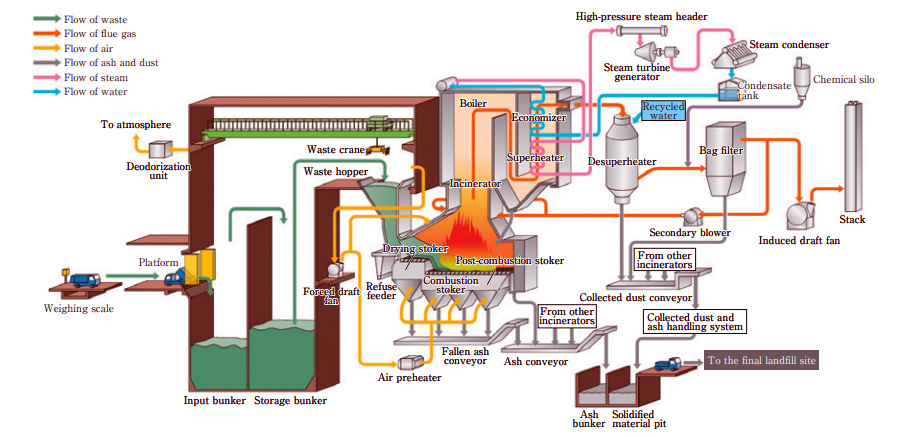
White papersOne of the characteristics of incinerators is that the waste used as fuel contains chlorine in high concentration. The chlorine reacts with alkaline metal, ect., to form a chloride, which is deposited as ash adhesion on boiler heat transfer tubes and the like. When this adhered ash melts, the corrosion environment is significantly deteriorated. In addition, the soot blow used to remove the adhered ash promotes the destruction of the corrosion scale and accelerates the metal loss of the heat transfer tubes. The ash adhesion behavior depends on temperature, and chloride is concentrated where the exhaust gas temperature is high, deteriorating the corrosion environment. Accordingly, a good understanding of the adhesion behavior and an appropriate design for the corrosion environment are required in order to prevent the corrosion of heat transfer tubes. This paper explains the metal loss behavior mainly due to the influence of ash adhesion, and also described examples of the corrosion behavior and corrosion protection in the actual plants.
White papersNext to having freshwater for drinking, water for irrigation systems is the second most important requirement for people – otherwise, we wouldn’t have fresh fruits and vegetables on our dinner plates! It is estimated that approximately 70% of freshwater extracted from rivers, lakes, and reservoirs is used for irrigation purposes, so it is critical that irrigation systems are designed for efficiency, sustainability, and to prevent backflow. Irrigation systems are rarely designed with reparability and failure prevention in mind. Components are often buried where they are difficult to access, are not testable or repairable, and fail to prevent overpressure or water-hammer events that damage components and cause leaks. Download this document from Watts, “Flow Control for Irrigation”, to learn more about approaches to designing your irrigation system.
White papers(Almost) Everything you want to know about Gaskets! This eBook discusses: Forces that occur in a gasketed joint Flange types and finishes Anti-seize compounds Seals Bolting Minimizing torque loss Gasket Selection Chemical compatibility Pressure-Temperature (PxT Factor) Physical and Mechanical Properties Other Considerations
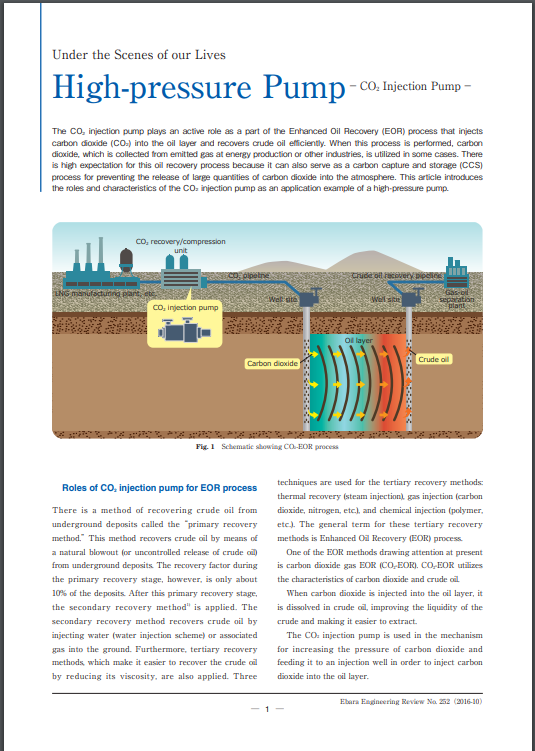
White papersThe CO2 injection pump plays an active role as a part of the Enhanced Oil Recovery (EOR) process that injects carbon dioxide (CO2) into the oil layer and recovers crude oil efficiently. When this process is performed, carbon dioxide, which is collected from emitted gas at the energy production or other industries, is utilized in some cases. There is high expectation for the oil recovery process because it can also serve as a carbon capture and storage (CCS) process for preventing the release of the large quantities of carbon dioxide into the atmosphere. This article introduces the roles and characteristics of the CO2 injection pump as an application example of a high-pressure pump.
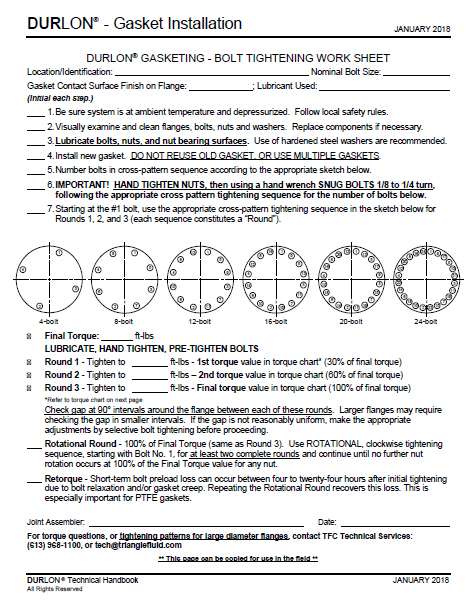
White papersDownload this handy reference sheet from Durlon® Sealing Solutions to properly tighten bolts during gasket installation.
White paperSuction Design Guide for Reciprocating Plunger Pumps
White papersThis Suction Design Guide from Triangle Pump Components is a handy resource that will better help you understand suction head calculations and installation considerations. In this guide, you will also find helpful tips on: How to maintain adequate suction head Avoiding vapor cavities in the pump system Pump installation guidelines that will help you avoid suction head problems
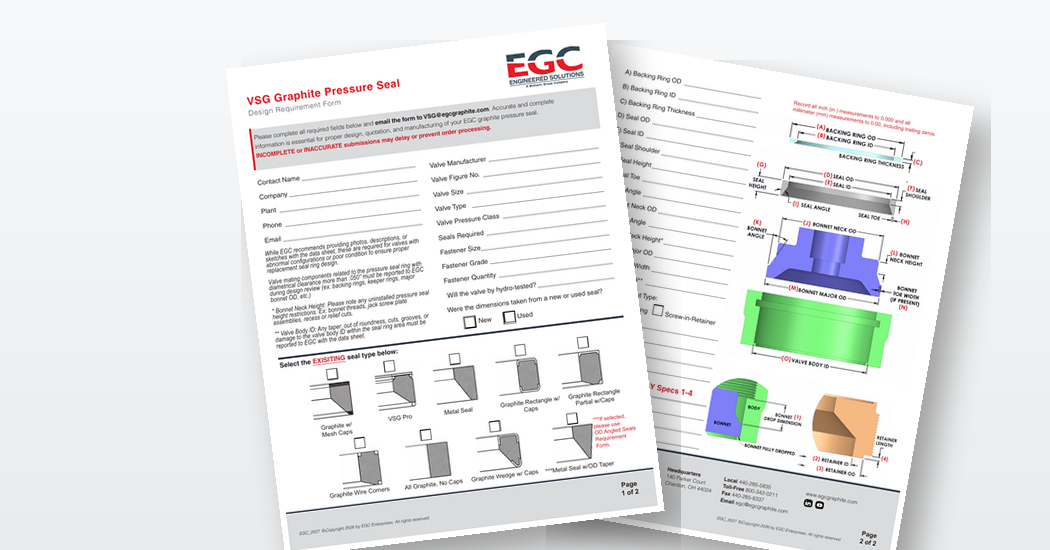
White papersData is essential to ensure proper fit & function of a new Pressure Seal. Download this Data Sheet to select the existing seal you are measuring and replacing.
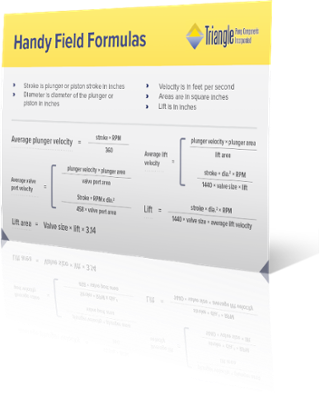
White papersTriangle Pump Components has created a handy field formulas reference card to help with quick calculations. Keep this card with you when working in the field or keep it handy at your desk as a quick reference guide. This card provides the instructions and formulas for finding pump valve measurements such as: Average plunger velocity Average valve port velocity Lift area Average lift velocity Lift Triangle Pump Components has defined the units and broken down each formula so that you can simply plug in the numbers from your system and determine the proper measurements for your plunger pump.
White paperSuction System Problems and How to Prevent Them
White papersReciprocating pumps are often subject to suction system issues. Some of them emanate from a lack of maintenance and are preventable. Others, however, are caused by wear and tear which can be mitigated upon early detection. In this eBook from Triangle Pump Components, you will learn about the most common set backs encountered while working with pump suction systems and solutions to prevent them. The guide will help combat issues such as: Friction or liquid loss Pressure loss at pump inlet Cavitation Acceleration pulsation
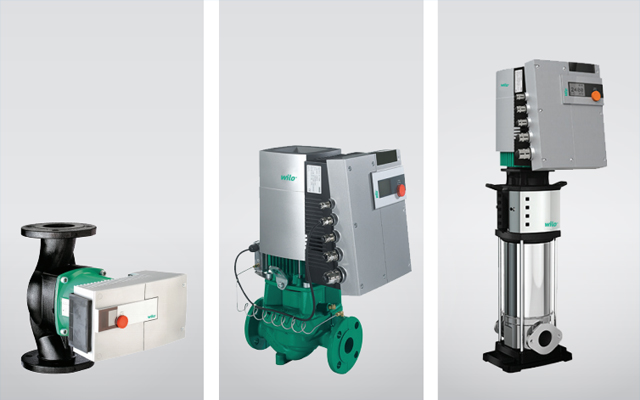
White papersEnergy savings solutions for HVAC applications – North America Energy is a valuable commodity. This is why Wilo created the world’s first high-efficiency circulator in 2001. With the help of ECM technology, this efficient, functional and flexible pump for heating, cooling, and air conditioning reduces annual power consumption by up to 80%. Standing for Electronically Commutated Motor, ECM essentially comprises a synchronous motor with a permanent magnet rotor. The unique rotor-stator construction helps eliminate electrical losses. Download the Brochure to Learn more!
White paperConsiderations for Selecting a Variable Frequency Drive or Soft Starter
White papersEvery AC induction motor needs an electrical control device to start and protect it. Selecting the optimal method of motor control is best approached by considering the connected equipment and what the application demands are. Some processes need to accelerate gradually to full rated speed and then continue to run at constant speed until the process is finished. Others may require the speed to vary continuously throughout the process cycle, accelerating and decelerating at predictable, repeatable ramp rates. Two commonly used motor control devices are the Variable Frequency Drive (VFD) and the Reduced Voltage Soft Starter. Each has advantages and disadvantages. This whitepaper discuss the similarities and differences of these two motor controllers and how to determine which of them will best suit your application needs.
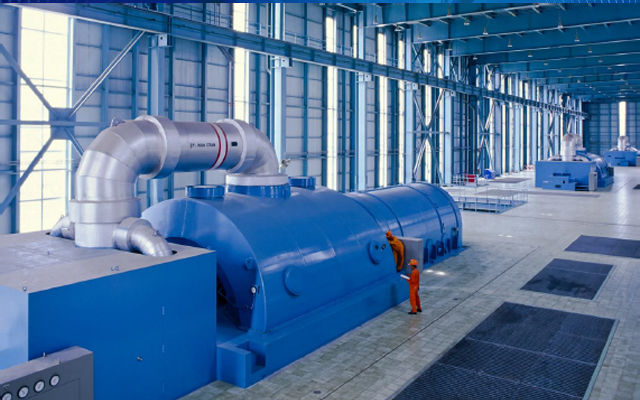
White papersWhat are the sealing challenges for turbines in power generation applications? What are some of the bearing sealing methods, challenges, and associated safety issues? What technologies exist to improve bearing sealing performance? On December 6th, 2017, Inpro/Seal® made a presentation at POWER-GEN International that discussed the specific sealing device improvements which have consistently yielded 4 or more leak-free years between maintenance intervals at various power plants around the world. Download this presentation to learn more about effective sealing technology that increases equipment reliability, reduces turbine downtime, and improves plant safety.