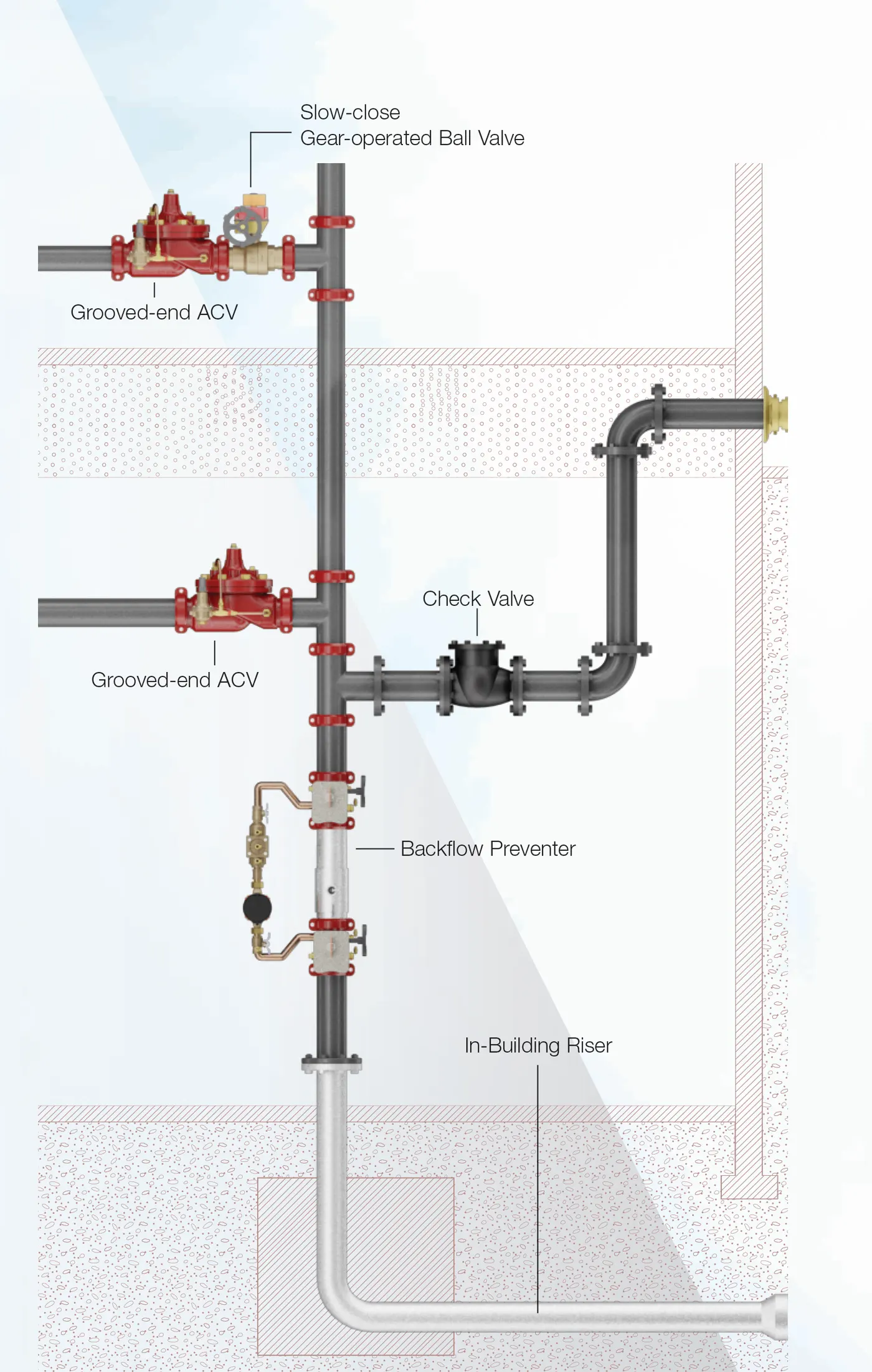
White papersCount on the Fire Protection Leader for Reliable Flow Control Solutions Ames provides a range of high-quality products designed for use in fire protection sprinkler systems. Our portfolio includes backflow preventers, relief valves, UL ball valves, automatic control valves (ACVs), gear-operated ball valves, UL strainers, and in-building risers. What sets our products apart High quality and unmatched performance Industry proven reliability Designed for easy serviceability ACVs with fused-epoxy coating that prolongs valve life Lighter, more compactly designed backflow preventers Lower installation costs ACVs fabricated with stainless steel Stainless steel products for severe situations inside and out UL listed/classified as well as locally required approvals Download this document to learn how to build quality and reliability into your fire protection system from the ground up.
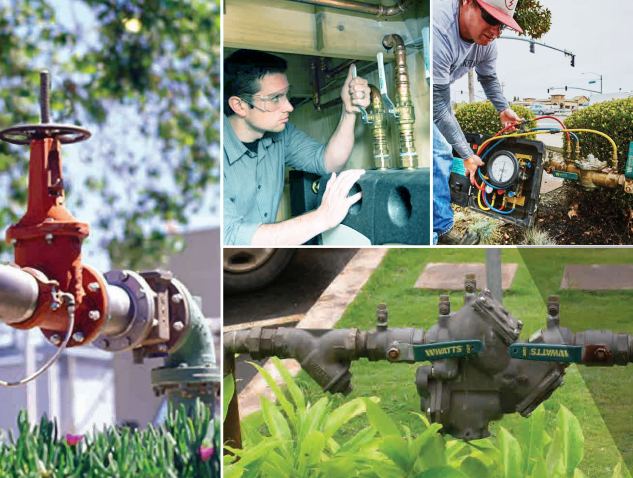
White papersBackflow Prevention Solutions for Keeping Water Safe Whether at home or in a commercial or industrial building, people expect safe and clean water when they turn on their faucets. The knowledge and diligence of plumbing professionals— paired with high quality, reliable equipment—ensures our potable water systems stay free of harmful or deadly contaminants. High-risk applications include dishwashers, carbonated beverage dispensers, hand-held shower heads, hose bibbs / sill cocks, irrigation systems, swimming pools, industrial supply piping, chemical feed pumps, laboratory sinks, cooling towers, boilers, and HVAC Systems. Download this eBook to help you learn how to identify cross-connections, specify and install the appropriate backflow preventers, and inspect them to ensure they operate correctly and are up to code. Plumbing professionals ensure our communities are safe from the dangers of backflow, so here are some backflow prevention solutions to keep water safe!
White paperOptimizing the Energy Use of Technical Building Systems
White papersWe spend most of our time in buildings – working, shopping, learning and sleeping. Therefore, it’s not surprising that these buildings consume a lot of energy. Most of this is used for heating, cooling and ventilation through technologies known as technical building systems. If these are incorrectly installed, poorly maintained or managed inefficiently, the whole building and its occupants can suffer. Simple improvements could help reduce energy waste, cut costs and make our buildings healthier, more comfortable and more productive places to be. Watch the video to learn more. <span data-mce-type="bookmark" style="display: inline-block; width: 0px; overflow: hidden; line-height: 0;" class="mce_SELRES_start"> </span> There is potential for 30% energy savings on average through optimization of technical building systems. Read the full report published by the energy consultancy Ecofys.
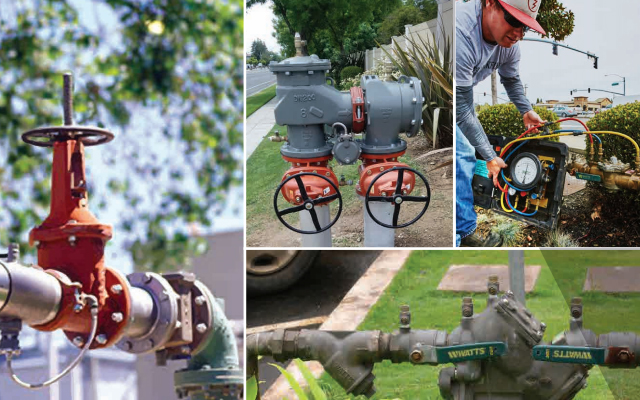
White papersDelivering Water Safely, Securely, and Efficiently Waterworks professionals safeguard one of our most valuable resources – our water. Whether to fill a glass or put out a fire, people need water that’s clean, safe, and reliable. And it’s up to our distribution system—and the people who design and maintain it—to get it to them. Controlling Pressure – Too much pressure can result in leaks and damage to sensitive components. Too little won’t be enough for everyday tasks. Preventing Backflow – Water safety is paramount, and backflow prevention is a key component. By identifying and protecting cross connections—actual or potential— water works professionals do their part in ensuring that the water we all drink is safe and clean. Removing Debris – Like it or not, debris gets in pipelines and can wreak havoc when it gets to smaller pipes and equipment. Ensuring that debris is removed from water protects the entire system from damage. Isolating – The ability to isolate parts of the system with valves is vital to repairs and routine maintenance. Download the guide to learn more about Backflow Prevention and Flow Control for Waterworks!

White papersThe start has been made for a technological revolution that will overcome the barriers between what is physical and digital. Everything that can be connected will be connected. And this transformation has begun. Industry 4.0 brings with it a trend toward total automation of plants, raising the concept of efficiency to a level that never seen before. This integration between machines that can make decentralized decisions and cooperate with each other and with humans, is possible thanks to tools such as big data, cloud computing and Internet of Things (IoT). The latter, combined with automated systems, allows you to connect the Internet with objects, beyond smartphones, tablets and computers. With IIoT, the Industrial Internet of Things, so called intelligent factories emerge, making the connection between sensors and other devices, to collect information in real time, analyze them and create response actions. The industry thus gains in efficiency, result of the economy of resources, increase of productivity and reduction of the time of inactivity, through the predictive maintenance of machines and equipment. In the case of electric motors, the monitoring through an intelligent device allows preventive actions and avoids unwanted stops in the production, increasing its effectiveness. WEG applied this technology by developing WEG Motor Scan, a monitoring solution to control motors installed in the most diverse applications of the industrial plant. Download this whitepaper to learn about Industry 4.0, the fourth industrial revolution, estimates for the coming years, smart factories, maintenance and PdM.
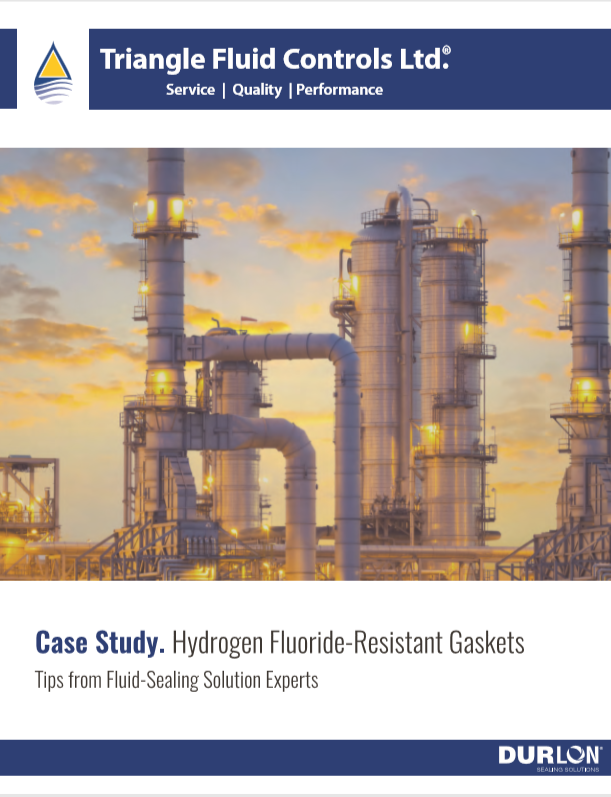
White papersWhy is sealing hydrogen fluoride a challenge? Because of its harsh nature, hydrogen fluoride is a difficult chemical to seal. If leaked, in any volume, manufacturers must immediately alert an emergency response team. Gaskets for hydrogen fluoride system must be constructed from materials capable of providing a reliable, leak-free seal and withstanding the chemical’s highly corrosive nature. The Hydrogen Fluoride Industry Practices Institute (HFIPI) offers a Material of Construction Guideline for both Anhydrous and Aqueous Hydrogen Fluoride, which includes gasket materials.
White paperComparison of Cartridge Seal Designs
White papersDownload this document to learn about: modular cartridge seal designs, which use generic hardware components that often result in compromised seal designs; ASTN & ABTN designations for operating with an internal steam quench; Dual pressurized and unpressurized configurations; Distortion and drive stresses; and high performance diamond-face technology.
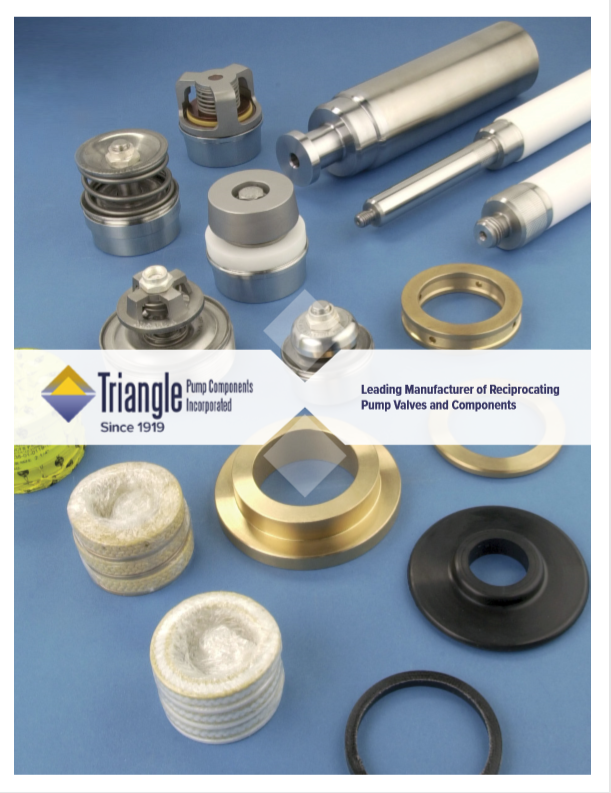
White papersTriangle Pump Components have earned a reputation for efficiency, long service life, and dependability. Our staff is dedicated to maintaining that tradition. Triangle uses state-of-the-art computer programs, including a comprehensive finite element analysis package, to address pump system problems that shorten the life of expendable parts and to ensure the continuing development of superior pump components in the future. Download our company brochure to better understand all that we can offer you!
White papersDownload this Food and Beverage Buyer’s Guide for Submersible Pumps to learn: How FSMA compliance starts with equipment wash-downs and ends below the floor with your wastewater pumps How similar Food and Beverage companies have improved their maintenance efficiency How finding the right pump that can stand up to the chemicals, solids and temperatures of your wastewater stream can reduce your unplanned downtime Complying with FSMA regulations requires constant maintenance and wash-downs, but every cleaning activity carries the risk of significant downtime from clogs, back-ups and pump failures associated with wastewater management. BJM Pumps® understands that profitability of your business runs on the efficiency of your operations, so use this guide to learn more about solids handling, corrosion resistance, or high temperature, high endurance applications.
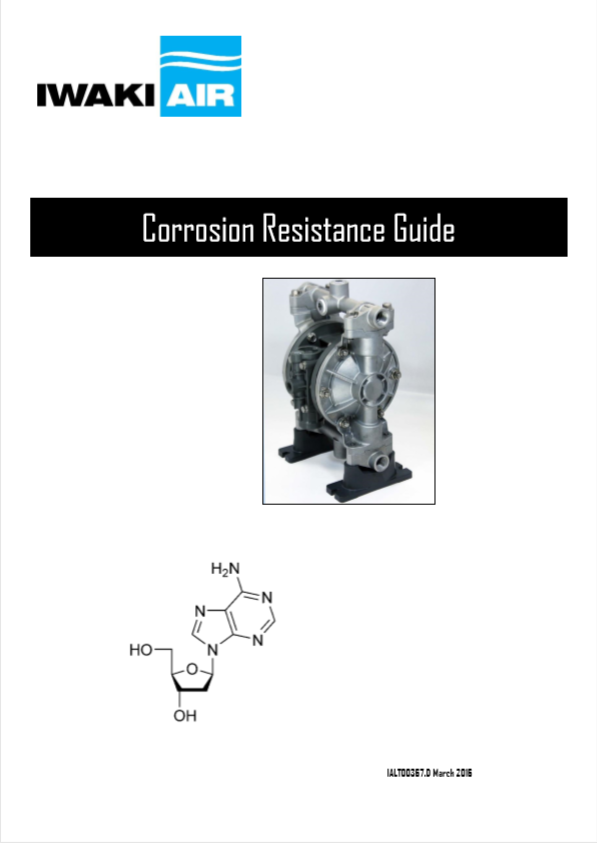
White papersThis document is intended as a general guide to help in the selection of pump wetted materials. The list includes many of the most common liquids used in industrial and processing applications. Warnings: 1. The data contained has been compiled from many sources and is believed to be reliable. NO GUARANTEE IS IMPLIED OR EXPRESSLY STATED HEREIN THROUGH THE USE OF THIS GUIDE. 2. Regarding the actual corrosion resistance properties of each material, testing of the materials of construction under actual or similar conditions is recommended. 3. Corrosion rates may vary with concentration, temperature and the presence of abrasives. Impurities or other trace elements common in industrial liquids may inhibit or accelerate the reaction of the material being pumped and the effect on pump materials. 4. Chemicals or liquids may independently be compatible with a type of material, however the combination of several liquids may completely change the chemical compatibility. 5. Even if a material has been deemed to be chemical compatible, always consider other such factors as chemical compatibility of the pumps non wetted parts, solids size, solids content, abrasion resistance, temperature of the liquid, temperature of the surrounding atmosphere, and airline or liquid line pressures. 6. When transferring flammable liquids or operating in explosive environments, follow all local fire and safety laws or regulations. Take care that the pump and all peripheral equipment is fully earthed and note that some pump materials such as non-conductive Polypropylene is unsuited to such applications. 7. Halogenated hydrocarbon solvents such as those listed below should not be used in aluminium equipment as a violent explosion could result. • Carbon Tetrachloride • Methylene Chloride • Dichlorethylene • Methyl Chloride • Chloroform • Trichlorethylene 8. Plastic pumps in general are recommended for strong acids and caustics and not recommended for high temperatures or slurries. Metal pumps in general are good for abrasion resistance, solvents, hydrocarbons, and high temperature applications.
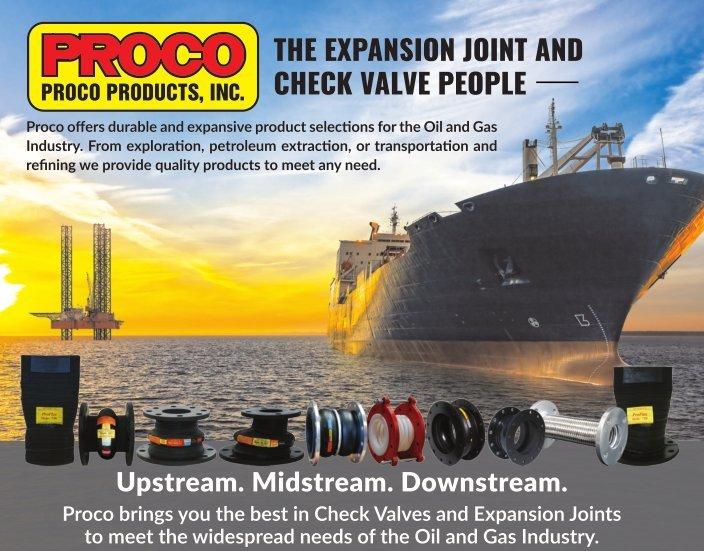
White papersOil and gas applications are broad in nature, ranging from the exploration and extraction of petroleum, to the refining and transportation of petroleum products. These types of businesses are crucial to the well-being of most large economies, so making sure that the best quality parts are being used is of the utmost importance. Proco Products, Inc. supplies nothing but the best, high-quality, durable check valves and expansion joints for use in the oil and gas industries. Proco operates worldwide, and maintains one of the largest product inventories in North America. For more information on expansion joints and check valves from Proco Products, Inc., and to check pricing and availability, contact us today.
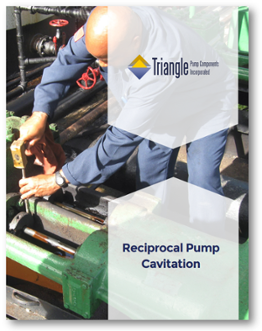
White papersOccurring in all types of pumps and often experienced in reciprocal plunger pump applications, cavitation can cause serious damage to pumps over time, resulting in pump erosion, noise, erratic power consumption, and vibration. Often, unchecked cavitation also damages the pump components and eventually leads to the complete failure of the plunger pump. Complete the form below to find out how to reduce the risk of serious damage, erosion, noise and erratic power consumption. This eBook from Triangle Pump Components covers the following: An overview of reciprocal pump cavitation Vapor pressure in pump cavitation The different causes of pump cavitation A checklist for cavitation diagnosis And much more…