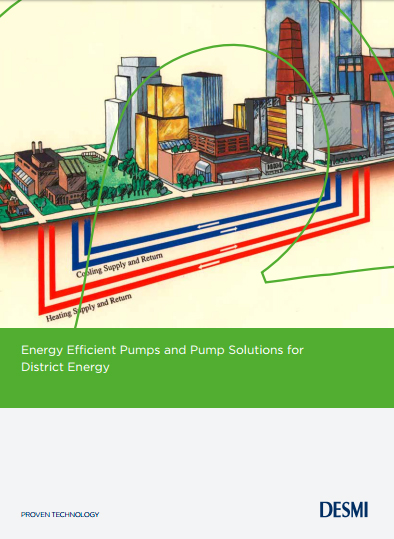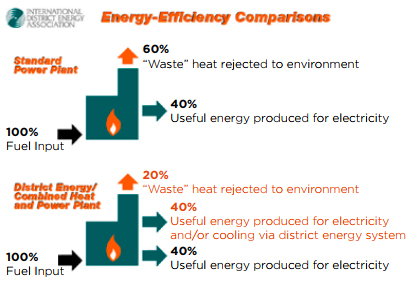
White papersSource: IDEA District Energy: DE is the terminology used by the industry for the integration of District Heating and District Cooling. Heating and cooling systems in total account for 46% of global energy use. Therefore, these two systems (DH & DC) represent a huge potential for further reducing CO2 emissions. District Heating is an energy distribution network that transports heated water generated in a centralized utility through piping to residential homes and commercial buildings primarily in urban areas. District Heating is clean, efficient and cost-effective due to its flexibility, scale of production and optimal heat generation conditions. The heat is often obtained from a CHP (Combined Heat & Power) plant burning fossil fuels or increasingly also biomass a.o. District Heating plants can provide higher efficiencies and better pollution control than localized boilers. Between the CHP plant and the distribution network there is a transmission pipeline through which heated water is pumped further onto the distribution network and into the individual buildings. The cooled water is then pumped back to the plant for re-heating. The fundamental idea of District Heating is to use energy that is already available and that otherwise would be wasted and cause pollution. In order to reduce primary energy demand and CO2 emissions, District Heat generation is often based on heat recycled from mainly CHP Plants, which includes a variety of fuels such as renewables, natural gas and oil. Alternatively it could be surplus energy from Waste-to-Energy plants, other power plants or industries. The positive economic and environmental benefits are discussed in this whitepaper.
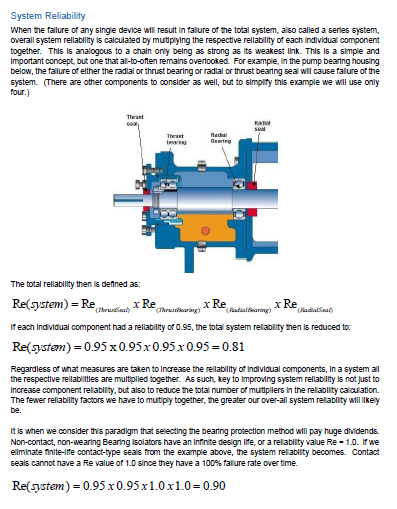
White papersIndustrial processes in all industries require rotating equipment to provide motion, pressure and other forms of energy to their product streams. Whether it’s a compressor or vacuum pump in a gaseous process stream, a pump in a liquid process stream, or a conveyor in a product handling stream, rotating equipment is critical to continued and reliable production. Common to all rotating equipment is a shaft supported by bearings. As such, protecting bearings is a basic requirement for plant reliability, regardless of industry. In fact, bearings are so ubiquitous, they’re often taken for granted as an intrinsic process element. That is, until they fail. Over the last 30 years bearing protection has emerged as prime territory for increasing overall rotating equipment reliability. With metallurgy, tribology and bearing design having progressed to the point where further enhancements to bearings and lubrication will be incremental at best. The deceptively simple task of retaining lubricant and excluding contamination from the bearing housing then remains as an opportunity for achieving significant gains in rotating equipment reliability. This technical whitepaper discusses: The Equipment Life Cycle System Reliability Bearing Failures Contamination Protection Traditional Contact Sealing Non-Contacting Bearing Protection Ingress Protection without Contact Diversion, Collection, Throttling, Rejection Lubrication Retention
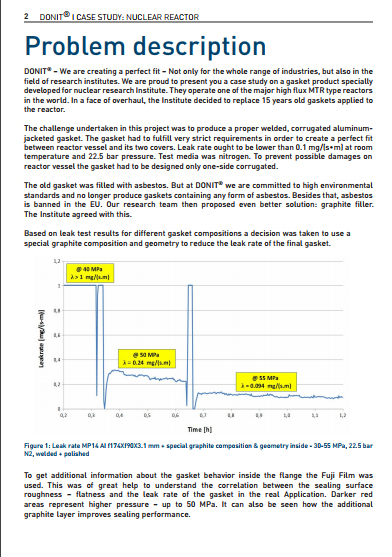
White papersHow did DONIT® create a gasket solution for a nuclear reactor? Learn about the testing and engineering involved for a gasket solution engineered for the Nuclear Research Institute.
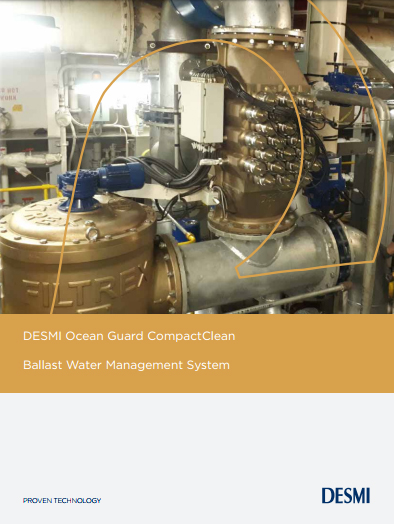
White papersAre you looking for a ballast water management system that can be installed easily and without relocating other equipment? CompactClean is the answer! Almost as easy as plug and play! It is one of the first ballast water management systems on the market that combines very low space with large flow rates. Only 2.8 m2 / 30 sqft is necessary for a 1000 m3/h / 4403 gpm system + 0.6 m2 / 6.4 sqft for the electrical panel, which can however be placed up to 100 m / 328 ft away from the system itself. The system is based purely on mechanical treatment and therefore it does not involve any use of chemicals or active substances. This eliminates risks of hazards to crew, vessel or the environment. First treatment step is filtration, second step is UV treatment. During de-ballasting, UV treatment is repeated, but the filtration step is skipped. Learn more by downloading the 16- page brochure, which discuss UV transmissions values, power consumption, automated reporting, and more!
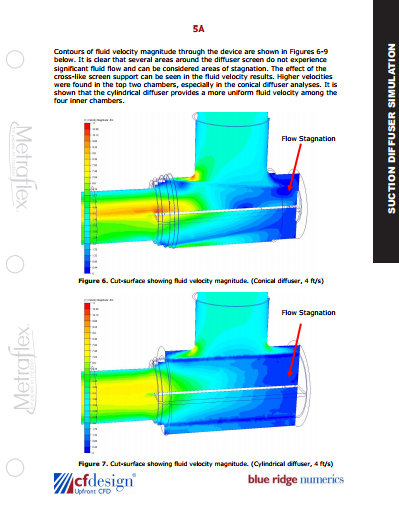
White papersTwo Computational Fluid Dynamics simulations are contained in this 21-page whitepaper which analyzes leading products used to condition and improve flow entering a pump. The first CFD analysis is of two popular styles of suction diffusers: the traditional cylindrical screen diffuser and the more recent model with a conical diffuser screen. The second simulation is of the CRV Flex. A fixed vane device placed in front of the pump’s suction side elbow which imparts a half revolution to the media flowing through the elbow. This minimal deflection of flow negates the turbulence caused by the geometry of the 90 degree elbow and produces measurably better flow conditions and lower pressure drops than a suction diffuser.
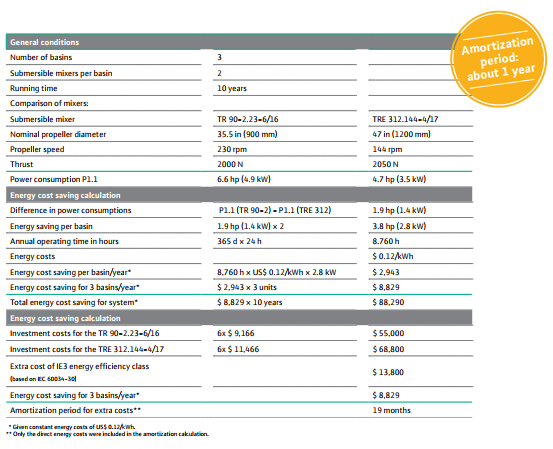
White papersIntake quantities to wastewater treatment plants can vary seasonally or due to weather conditions. In the TRE 312 series, Wilo has developed a highly efficient submersible mixer that is ideally suited to sludge activation using the MBBR method. The small propeller diameter means it can also be used in smaller activated sludge tanks. The new mixer ensures effective suspension and flow generation in the continuous biological cleaning process. This makes the Wilo TRE 312 an ideal addition to the existing product range of slow-running Wilo submersible mixers, complementing the existing range perfectly. The Wilo TRE 312 submersible mixer enables you to save energy costs. The new blade geometry and the highly efficient submersible motor ensure outstanding energy efficiency – even in energy-intensive continuous duty. And as the annual overall saving shows, the thrust required here can also be cost-effective. Download the 4-page document to review the Cost Savings that can be achieved.
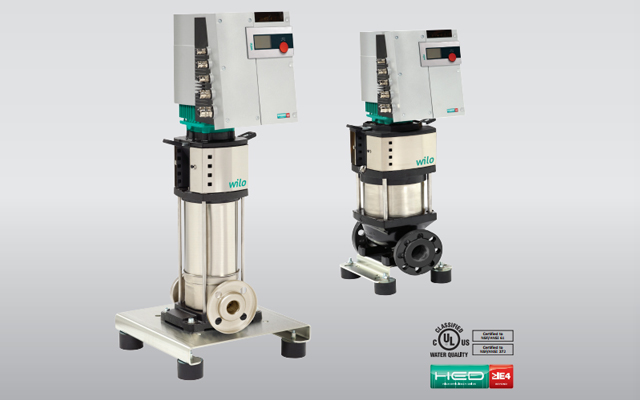
White papersExcellent performance with less power consumption Today, pumps account for no less than 10% of the world’s electricity consumption and two thirds of all pumps use up to 60% too much energy. If every business switched to a high efficiency pump there could be global savings of 4% of the total electricity consumption- comparable to a residential electricity consumption of 1 billion people. Of all the multistage centrifugal pumps that are available on the market, the Wilo Helix EXCEL stands alone for optimal efficiency, performance, quality, and serviceability. Thanks to the use of electronic commutated motor (ECM) technology together with a High Efficiency Drive (HED), it can achieve motor efficiency levels of up to 94%, which surpasses NEMA Super-Premium motors that meet the NEMA 12-12 efficiency levels of today. Compare the same operation duty point with other multistage pumps, and the Helix EXCEL can achieve the same throughput while using less power consumption. Excellent in energy savings and life cycle costs The most important reason to choose the Wilo Helix EXCEL is the total energy savings and operating costs attached to the pump. When analyzing both, the clear choice is revealed…
White papersThis 56-page Price Book provides in-depth details about WILO Submersible pumps and accessories for water supply from water wells, agriculture, dewatering and industrial applications.
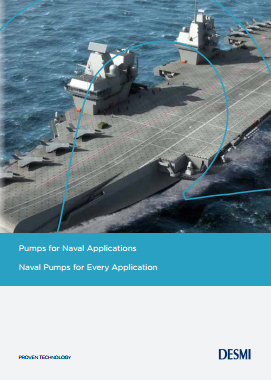
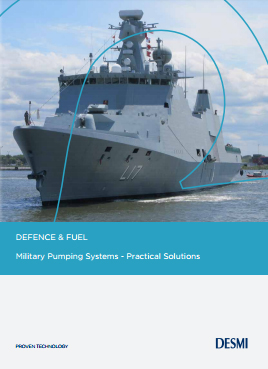
White papersDESMI has a full understanding of Naval technical requirements and applications when it comes to pumps and systems. DESMI can select the correct choice of materials and construction for each individual application, whether it is bilge, fire, ballast, general service, cooling, fuel, lubricating oil transfer, or other naval applications. Any of these pump applications can be supplied fully shock rated and for fully submerged operation in compartments which are vulnerable to ‘action’ damage. DESMI offers a complete package from ‘request for quotation’ to ‘through life support’ for their products, from a team who are dedicated to Naval applications and requirements.
White papersDESMI design and build liquid handling solutions used by military forces and navies around the globe. DESMI is an integrated pump system supplier that utilizes products from other world class equipment suppliers to complement the extensive DESMI pump range. Based on many years of experience with systems suitable for working in austere conditions and environments, DESMI provides total liquid management – from project management and systems integration to procurement and logistics planning.
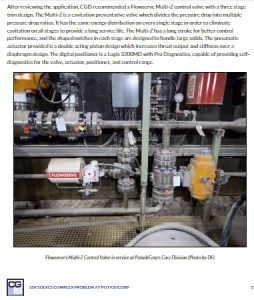
White papersPotash is a primary nutrient used to produce healthy crops because it has a significant impact on the taste, texture, and nutritional value of a wide variety of plants. Typically found 1 to 3 kilometers underground, potash is ‘mined’ and pumped to the surface for processing. The world’s largest producer of potash, PotashCorp, uses large positive displacement pumps to bring potash brine and wash water to the surface. PotashCorp needed to automate a positive displacement pumping system with a control valve that could: handle high pressure differential; was rugged enough to provide a long service life; and was able to handle media containing solids. Working with CGIS, Potash Corp identified the best severe service valve for their specific application.
White papersHeating and cooling systems in total account for 46% of global energy use. Therefore, District Heating & District Cooling represent a huge potential for further reduction of CO2 emissions. DESMI has produced pumps for District Heating for almost 90 years and are specialists in providing energy efficient pump solutions with minimum maintenance requirements and long life cycles.