
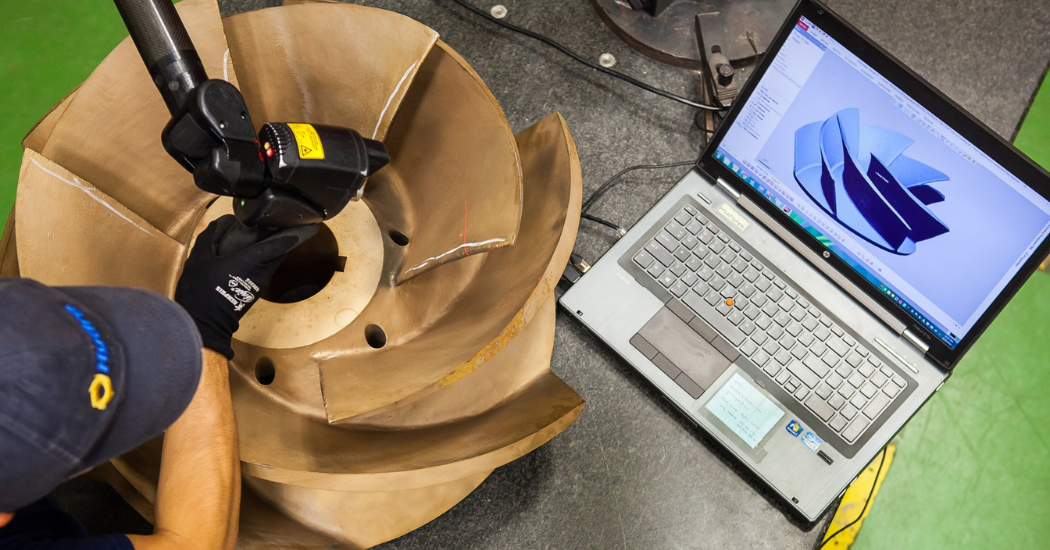
Founded in 1969, Hydro Inc, is the largest independent pump rebuilder and operates with a global network of service centers. Hydro provides engineering solutions and value-added services to improve pump reliability, extend pump life, and reduce overall life cycle costs. With a strong engineering foundation and an unbiased viewpoint, Hydro approaches every repair as an opportunity for improvement in equipment design, reliability, and performance. We pride ourselves in our comprehensive documentation, adherence to high-quality standards and strict component tolerances, and commitment to customer service.
Hydro’s core business of engineered repair and field service is bolstered by a wide range of other services designed to help end users improve their operational efficiency. These services are designed to reduce the total cost of equipment ownership by addressing factors that impact equipment availability, reliability, and performance. Some examples include field testing and troubleshooting, on-demand and in-person skill development, condition monitoring, system optimization, and expedited parts supply.
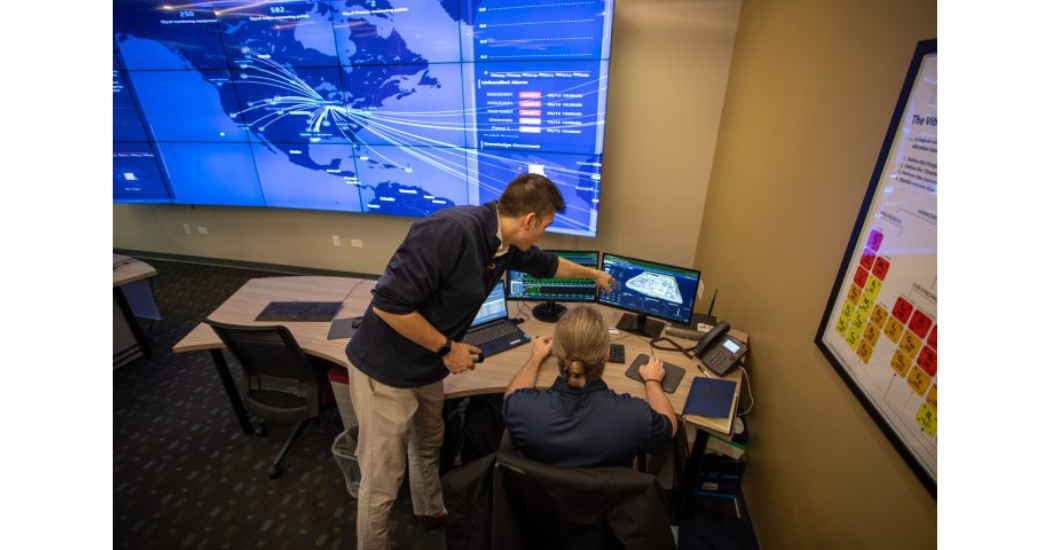
In addition to our global service centers, Hydro’s Chicago headquarters also houses our Hydraulic Institute certified performance test lab and our Centaur Monitoring & Diagnostic center.
From Hydro Inc
Articles 75
White Papers
- Centaur’s Wireless Battery-powered GatewayRegister to download
Our Solution Wireless sensors combined with a wireless battery-powered gateway can provide a flexible, safe, cost-effective, and reliable solution for collecting continuous condition monitoring data on rotating equipment where electric power is unavailable. The gateway transmits data collected to Hydro’s cloud-based Centaur Enterprise Predictive Maintenance (EPM) software, where end users can quickly assess the real-time status of equipment condition and access advanced tools for deeper diagnosis. The dedicated Centaur engineering team also accesses collected data through the EPM software to provide monitoring oversight, including monthly health reports, advanced analysis, and emergency support during detected alarm events.
- Centaur’s Pressure Monitoring SolutionRegister to download
The Problem Industrial users have relied on analog gauges and route-based data collection methods for decades. These methods often lead to inaccurate or incomplete readings and can expose workers to elevated safety risks, especially in hazardous environments. More importantly, traditional methods do not provide the benefits that continuous monitoring does, such as early detection and warning alerts, remote support for troubleshooting and diagnostics, and improved MTBR/MTBF. Download to read about Hydro Inc.’s solution.
- Hydro Learning Hub 3: Wear Ring ClearancesRegister to download
The advent of remote wireless condition monitoring technology and the increased focus on reducing operating costs is accelerating the industry’s move towards predictive maintenance. This maintenance strategy offers significant benefits over the traditional methods of either running to failure or scheduling preventative maintenance based on historical run times. The continuous acquisition of pump operating data allows a predictive maintenance approach that will reduce operating costs by: Trending pump degradation which allows work to be scheduled during planned outages to provide significant increased profitability through elimination of lost production Extending Mean Time Between Repairs (MTBR); pump health is distinguished through proper data acquisition and analysis, effectively reducing maintenance costs Operating near the pump Best Efficiency Point (BEP) and reducing the amount of pressure throttled across a valve; this results in considerable parasitic energy cost savings as well as maintenance cost savings due to improved pump and valve life Determining pump health and understanding the critical factors that affect the reliability and continued operability of a pumping system is quintessential for moving into predictive maintenance space. The wear ring is an important component in the overall pump design and the centerpiece for predictive maintenance. Calculating and trending this clearance in concert with specific vibration data will indicate the pump’s remaining useful life and answer that age-old question – will my pump make it to the next outage?
- Discharge RecirculationRegister to download
Discharge recirculation occurs when a pump is operating significantly away from its best efficiency point (BEP). The BEP is the operating point at which the angle of the flow most closely matches the impeller and diffuser/volute vane geometry. The close correspondence of the fluid angle and fixed vane angle at this point produces the least possible losses incurred throughout the pump operating range, resulting in maximum pump efficiency. The farther that the pump operates from the BEP, the greater the mismatch between the flow angle and the fixed geometry vane angles. This mismatch results not only in increasing shock losses that reduce pump efficiency, but also many other detrimental effects on pump health; these effects are all caused by an increasing susceptibility of the flow to internal recirculation. Discharge recirculation occurs at the outlet of the impeller and is related to the angle of the exiting fluid. In this condition, there is a mismatch between the angle of the flow exiting the impeller and the inlet angle of either the volute cutwater or diffuser vanes. Recirculation becomes more severe when the divergence is more significant.
- Suction RecirculationRegister to download
Suction recirculation is caused by flow incidence angles that are significantly dissimilar to the inlet vane geometry. The stalled area on the inlet vane produces a hydraulic instability, resulting in the formation of fluid swirl. Large inlet areas magnify the formation of fluid swirl as the fluid has enough “room” to recirculate. When severe, the fluid circulates out of the impeller eye and interferes with normal suction flow. The detriments of suction recirculation are two-fold. First, the fluid swirl can cause the suction pressure to fall below the fluid vapor pressure, creating vapor bubbles. With changing pressure fields, the bubbles implode and release energy. If this collapse occurs on the vane itself, material damage can result. This is known as separation and/or cavitation which reduces the operating life of the impeller.
Ask Hydro Inc
Questions about a product, a quote or a spec? Send your request and we pass it to the right contact at Hydro Inc.
Loading the request form