Why High-Power Fiber Lasers Mean Cutting the Cord on Nitrogen Deliveries
High-power fiber lasers deliver unprecedented cutting speeds and material thickness capabilities, but that performance depends entirely on a continuous supply of high-volume nitrogen assist gas.
High-power fiber lasers deliver unprecedented cutting speeds and material thickness capabilities, but that performance depends entirely on a continuous supply of high-volume nitrogen assist gas. Operations still relying on bulk liquid nitrogen deliveries face a supply chain dependency that constrains cutting performance and inflates operating costs. A nitrogen generator for fiber laser cutting eliminates the bottleneck and puts gas production under direct operational control.
Why High-Power Lasers Increase Nitrogen Consumption
The relationship between laser wattage and nitrogen consumption follows a simple principle. Higher power melts material faster, which means operators must evacuate more molten metal from the cutting zone in less time. Facilities moving from 10kW systems to 20kW or 30kW units typically see substantial increases in gas volume requirements that scale with the added cutting capacity.
Nitrogen’s role in the cutting process goes beyond simple cooling. The gas creates a positive-pressure environment that physically ejects molten material from the kerf while preventing oxidation. Clean edges and oxide-free cuts depend on maintaining adequate gas flow at the right pressure throughout each operation. When the laser power doubles, the assist gas volume and velocity must increase proportionally to maintain cut quality.
Exposing the Risks of Bulk Nitrogen Delivery
Bulk nitrogen delivery creates dependencies that facilities cannot control, threatening both production schedules and workplace safety.
Constant Supply Chain Risks and Disruptions
External gas suppliers face market fragmentation and logistical constraints that create delivery unpredictability. Truck schedules rarely match production demands, and a single delayed shipment can halt laser operations for hours or days when high-volume cutting drains tanks faster than expected.
Bulk nitrogen pricing also fluctuates with market conditions, fuel costs and regional availability. Long-term contracts provide some price stability but lock operations into fixed volumes that often mismatch actual consumption as production scales up or down.
Hidden Facility Dangers of Cryogenic Liquids
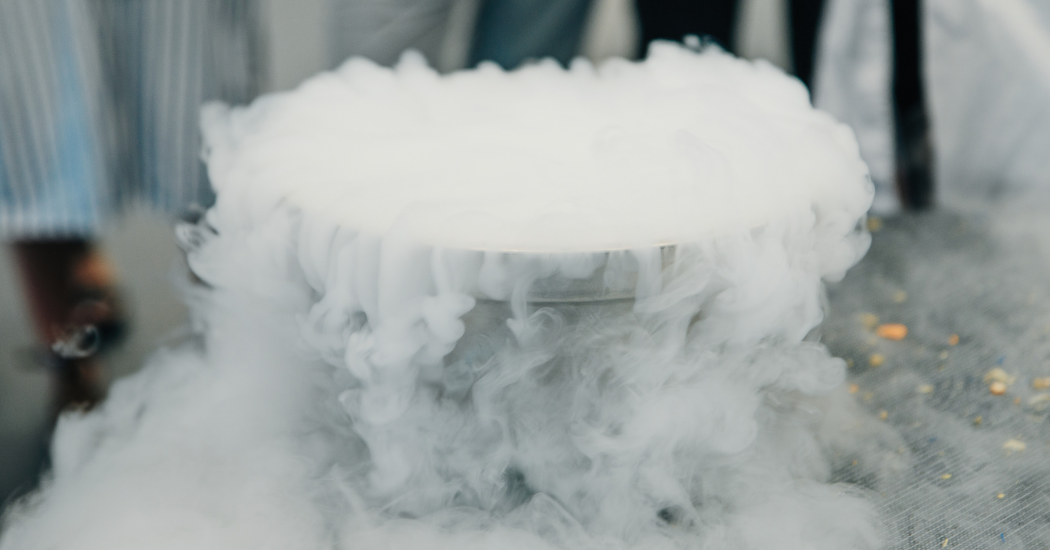
Liquid nitrogen storage creates serious safety hazards that facility managers must address through training, equipment and protocols. The substance remains incredibly cold, around -320° Fahrenheit, which causes severe tissue damage on contact. Workers handling connections, performing tank maintenance or responding to leaks face constant exposure to this risk.
The expansion ratio poses a larger threat because one liter of liquid nitrogen expands to nearly 700 liters of gas during vaporization. In enclosed storage areas or poorly ventilated spaces, this rapid expansion silently displaces oxygen and creates risks of asphyxiation and cryogenic burns without warning. These conditions require continuous monitoring and emergency response protocols that can further complicate facility operations.
The Technology Behind On-Site Nitrogen Generation
A nitrogen generator for fiber laser cutting works as a compressed air system, converting ambient air into a continuous supply that scales with production demands.
Two Main Technologies for On-Demand Gas
Membrane separation uses hollow fiber technology to filter oxygen molecules from compressed air. The mechanical process pushes air through selective membranes that produce nitrogen purities ranging from 95% to 99.5% while allowing nitrogen to pass and blocking other gases. The system operates continuously with minimal moving parts, making it reliable for facilities that prioritize uptime over maximum purity.
Pressure Swing Adsorption (PSA) takes a different approach. Carbon molecular sieves trap oxygen molecules under pressure while allowing nitrogen to pass through. The technology achieves higher purity levels than membrane systems and offers more precise control over output specifications. Both methods represent the broader industrial shift toward modular production of essential resources at the point of use.
The Sustainability Case for On-Site Generation
Traditional bulk nitrogen supply depends on cryogenic distillation plants that need significant energy infrastructure to cool and separate air components. Trucks must transport the resulting liquid nitrogen to customer sites, creating a substantial carbon footprint through both production and transportation.
On-site generation eliminates these inefficiencies by producing only the nitrogen needed. This avoids the energy waste of cryogenic processing and emissions associated with delivery vehicles while aligning with corporate sustainability initiatives. The shift toward distributed production reduces environmental impact and prioritizes efficiency.
Cost Comparison of Liquid Nitrogen vs. On-Site Generator
Bulk liquid nitrogen creates multiple recurring expenses that accumulate across the operation. Monthly tank rental remains constant regardless of usage, while delivery charges shift with fuel prices and market conditions. Hazmat handling fees and gas lost to boil-off add costs that many plants never fully account for.
On-site generation eliminates these variables by replacing them with a single, predictable expense — the electricity needed to run the compressor and separation system. The capital investment amortizes over multiple years while removing supplier dependencies. Operations gain complete pricing visibility and the ability to calculate per-unit nitrogen costs.
On-Site Generation in Practice
The case of Dishaka, a food packaging company, demonstrates the benefits of transitioning from bulk delivery to on-site generation. The company faced recurring supply disruptions that interrupted production schedules and created uncertainty around material availability.
Installing an on-site nitrogen generator removed delivery dependencies and gave the plant complete control over its gas supply. This study on process efficiency demonstrates how manufacturers can strengthen reliability while reducing costs by investing in infrastructure.
Achieve Independence in Your Gas Supply
High-power fiber lasers are a significant capital investment, and the key to maximizing their value lies in managing nitrogen supply. A nitrogen generator for fiber laser cutting delivers that control by eliminating supply chain risks, removing hidden costs and giving operations complete authority over production uptime and safety.