How Do Temporary Filtration Solutions Keep Your Project on Schedule?
A failed treatment system can stall every task that depends on it. Boiler startup waits on treated water, plant commissioning waits on boilers and milestone dates begin to slip.
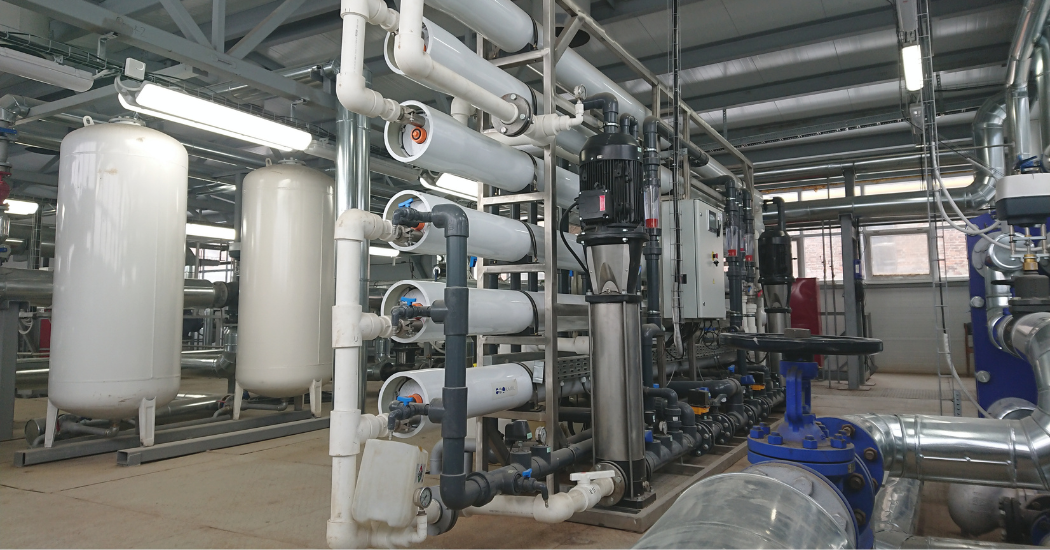
A failed treatment system can stall every task that depends on it. Boiler startup waits on treated water, plant commissioning waits on boilers and milestone dates begin to slip. How do temporary filtration solutions keep a project on schedule? They bridge the gap with interim equipment matched to the fluid, the site and the timeline.
How Continuous Filtration Protects Equipment Performance and Efficiency
Cooling tower research illustrates how much contamination control can matter to equipment performance. These studies focus on cooling tower installations rather than temporary deployments, but their findings underscore the importance of consistent filtration.
Research has found that temporary filters can protect:
- Maintenance intervals: The U.S. Department of Energy (DOE) reports that side-stream filtration lets cooling towers operate for longer periods between full cleanings, which can reduce downtime, labor, water loss and chemical use.
- Efficiency gains: Research from 2024 found an average 18% higher coefficient of performance in a cooling system while microsand filtration operated under similar environmental conditions.
- Resource savings: At Toyota and Nissan plants in Mississippi, a DOE-funded 2024 evaluation of electrochemical filtration reported reduced water use and chemical treatment, with minimal impact on energy use.
How Custom-Engineered Filtration Adapts to Unique Site Conditions
By understanding how factors like fluid viscosity, physical mobility, space and flow rate contribute to filtration designs, manufacturers can determine whether permanent or temporary equipment will solve their problem.
For instance, when a polymer manufacturer needed to filter viscous fluid without clogging or loss of efficiency and required equipment that could be moved around the facility. SC Industrial Sales built a skid-mounted air-operated double-diaphragm pump and a custom-engineered filtration vessel.
SC Industrial Sales explains, “We tailored the entire design to match the client’s unique space and portability requirements,” so the unit can move throughout the facility to filter thick polymers at different work points. Viscosity and mobility served as design inputs, reflecting the consultative engineering behind the build. The resulting mobile filtration system shows how matching fluid behavior and site space at the design stage can help prevent installation and operating delays.
Beyond custom builds, their temporary rental filtration skids provide immediate adaptability when site demands shift unexpectedly or require short term deployment. By offering temporary filtration and flushing systems spanning 5 to 2,000 GPM, modular equipment enables facilities to match exact flow rates, pressure limits, and environmental safety ratings on demand.
How Temporary Filtration Keeps Contamination From Stalling Production
A European biofuel refinery faced an early setback. Its filters clogged within hours of installation and commissioning, which threatened continuous production. Pall’s service and rental facility supplied an interim filter housing as an immediate solution until a more permanent option could be implemented.
Delivery came within two weeks of the request, and the housing became operational within days. It extended operating time from two hours to one week, and later added prefiltration, which stretched that interval to six weeks. As a result, the production unit avoided a shutdown due to catalyst contamination while the team evaluated a longer-term solution.
Sample analysis also checked the rental units’ performance and guided the choice of permanent equipment. The sequence offers a practical template, stabilizing operation with interim equipment, and then refining configurations as analysis clarifies what a permanent system requires. In that way, temporary filtration solutions can buy a project the time to decide with confidence.
Why Rapid Deployment Prevents Costly Commissioning Delays
A petrochemical plant in Saudi Arabia faced a commissioning delay when its demineralizer plant fell behind schedule. Without treated water, boiler commissioning and the entire plant startup would slip, and the engineering, procurement and contracting company would have faced contractual penalties for each day of delay.
GET Water, a Tamimi Group subsidiary, mobilized its fleet of mobile water treatment equipment, which Veolia built, designed and serviced. The 10 brackish-water reverse osmosis units arrived on-site within three days, and seven days after arrival, they were producing demineralized water. The units stayed for 30 days, supplying water for the initial blows and boilout that prepared the boilers.
That supply helped the boilers and, in turn, the entire plant reach commissioning on time. GET Water also arranged temporary power, and Veolia provided around-the-clock operation and maintenance support. The timeline shows how the gap between mobilization and the first treated water can decide whether downstream dates hold.
Frequently Asked Questions About Filtration Options
The following questions revisit how temporary filtration supports project schedules and why equipment compatibility matters.
How do temporary filtration solutions help prevent project delays?
They provide interim treatment when contamination threatens operations or permanent equipment isn’t ready. That bridge can keep dependent work moving until the permanent system is available.
Why must filtration equipment match site conditions?
Equipment has to suit the fluid being treated and the space available at the site. Portability should also fit how the project needs to move or position the unit.
How does continuous filtration reduce maintenance interruptions?
Side-stream filtration can extend the time between full cooling tower cleanings. Fewer cleanings may mean less maintenance downtime.
How can mobile treatment support plant commissioning?
Mobile treatment can supply water for boiler preparation while crews complete the implementation of a delayed permanent system. That support can help protect a plant’s startup schedule.
Choosing a Filtration Partner That Keeps Projects Moving
Project teams selecting a filtration partner can weigh two questions together. Does the equipment suit the fluid and the site, and can it be delivered and commissioned within the project timeline? A partner with hands-on filtration expertise can help teams answer both before equipment arrives, so temporary filtration solutions can protect milestones from day one.