Mitigating Reduced Pressure Zone Backflow Discharge [Webinar]
As you read in our newest article, “Protecting our Water Supply and Infrastructure with Backflow Prevention & Flood Mitigation Technologies“, Reduced Pressure Zone (RPZ) backflow preventers are an integral part…
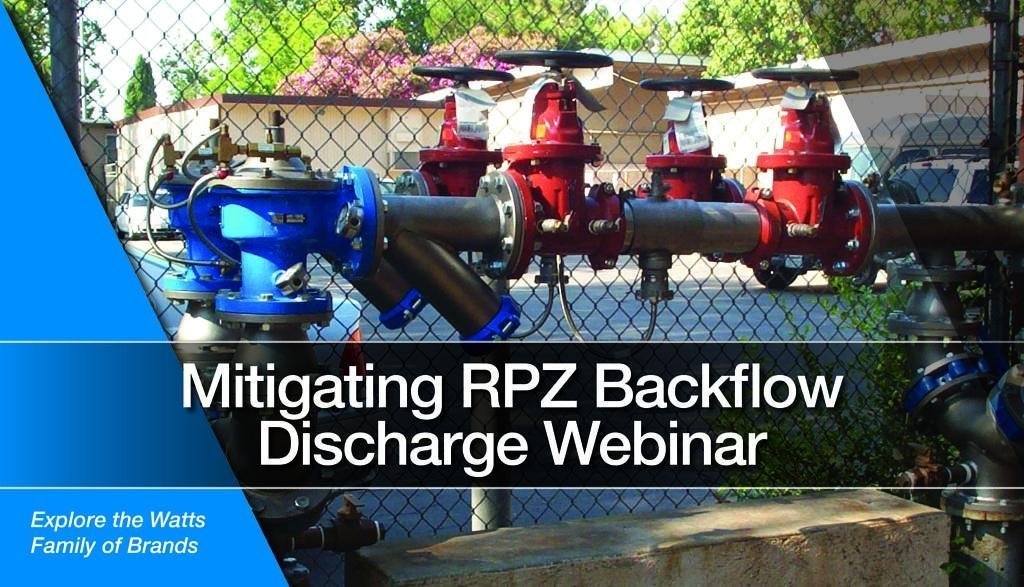
As you read in our newest article, “Protecting our Water Supply and Infrastructure with Backflow Prevention & Flood Mitigation Technologies“, Reduced Pressure Zone (RPZ) backflow preventers are an integral part of any rigorous cross-connection control program. While they offer the highest protection of any backflow assembly, the relief valve discharge can cause issues if you do not fully understand how RPZ backflow preventers work.
A vital part of the RPZ is the relief valve, which is designed to open during certain backflow conditions to allow potentially contaminated water to flow out and down the drain, rather than into the potable water system. However, other causes, such as debris fouling the first check, will also cause the relief valve to discharge. Discharge rates vary based on the failure mode, model, size, and supply pressure, but can easily reach into the hundreds of gallons per minute.
Loading registration