Theory Bites: Splitters In Impeller Design
Theory bites is a collection of basic hydraulic theory and will touch upon pump design and other areas of pump industry knowledge.
Theory bites is a collection of basic hydraulic theory and will touch upon pump design and other areas of pump industry knowledge.
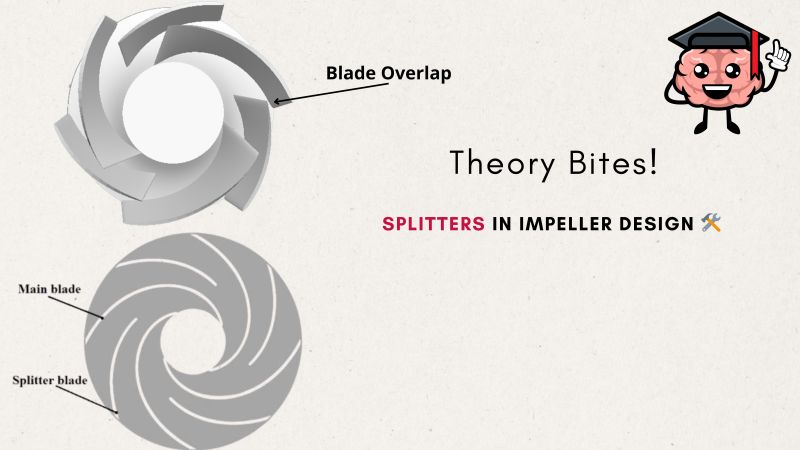
In pump design, splitter blades (shorter blades positioned between the main impeller blades) are a game-changer. They can enhance performance by improving flow distribution and reducing pressure fluctuations.
Why Use Splitters?
🚀 𝗘𝗻𝗵𝗮𝗻𝗰𝗲𝗱 𝗘𝗳𝗳𝗶𝗰𝗶𝗲𝗻𝗰𝘆: Splitters help distribute the flow more evenly, leading to improved hydraulic performance. Studies have shown that adding splitter blades can increase the total head and overall efficiency of centrifugal pumps.
🚀 𝗥𝗲𝗱𝘂𝗰𝗲𝗱 𝗡𝗣𝗦𝗛𝗿: By alleviating inlet flow congestion, splitters can improve suction performance, effectively reducing the Net Positive Suction Head required (NPSHr). This means the pump is less prone to cavitation, enhancing operational reliability.
🚀 𝗥𝗲𝗱𝘂𝗰𝗲𝗱 𝗣𝗿𝗲𝘀𝘀𝘂𝗿𝗲 𝗙𝗹𝘂𝗰𝘁𝘂𝗮𝘁𝗶𝗼𝗻𝘀: By smoothing out the flow, splitters can minimize pressure pulsations, leading to more stable pump operation. Research indicates that different design parameters of splitter blades have a significant effect on pressure fluctuations at the impeller-volute interface.
𝗗𝗲𝘀𝗶𝗴𝗻 𝗖𝗼𝗻𝘀𝗶𝗱𝗲𝗿𝗮𝘁𝗶𝗼𝗻𝘀
While splitters offer benefits, their design requires careful consideration:
🚀 𝗟𝗲𝗻𝗴𝘁𝗵 𝗮𝗻𝗱 𝗣𝗼𝘀𝗶𝘁𝗶𝗼𝗻𝗶𝗻𝗴: The optimal length and placement of splitter blades are crucial. Improper design can lead to increased vibration or even reduced performance.
🚀 𝗧𝗿𝗶𝗺𝗺𝗶𝗻𝗴 𝗟𝗶𝗺𝗶𝘁𝗮𝘁𝗶𝗼𝗻𝘀: Incorporating splitter blades can limit the extent to which an impeller can be trimmed. To maintain proper blade overlap and ensure hydraulic balance, both main and splitter blades must be uniformly trimmed. This constraint can affect the flexibility of performance adjustments through impeller diameter reduction.
🚀 𝗙𝗹𝗼𝘄 𝗗𝘆𝗻𝗮𝗺𝗶𝗰𝘀: Understanding the internal flow patterns is essential. Numerical simulations and flow diagnostics can aid in designing splitter blades that enhance performance without introducing adverse effects. Computational Fluid Dynamics (CFD) studies have been instrumental in analyzing these flow patterns and optimizing splitter blade designs.
By thoughtfully integrating splitter blades into impeller design and considering these factors, engineers can achieve pumps that are both efficient and reliable.
Have you experimented with splitter blades in your pump designs?
Read more Theory Bites from Maria Elena Rodriguez.