The Role of Packing in Pump Reliability
Pump performance begins with sealing reliability. Compression packing plays a critical role in maintaining efficiency, safety, and equipment longevity, particularly in pumps operating in slurry, abrasive, and chemically aggressive environments.
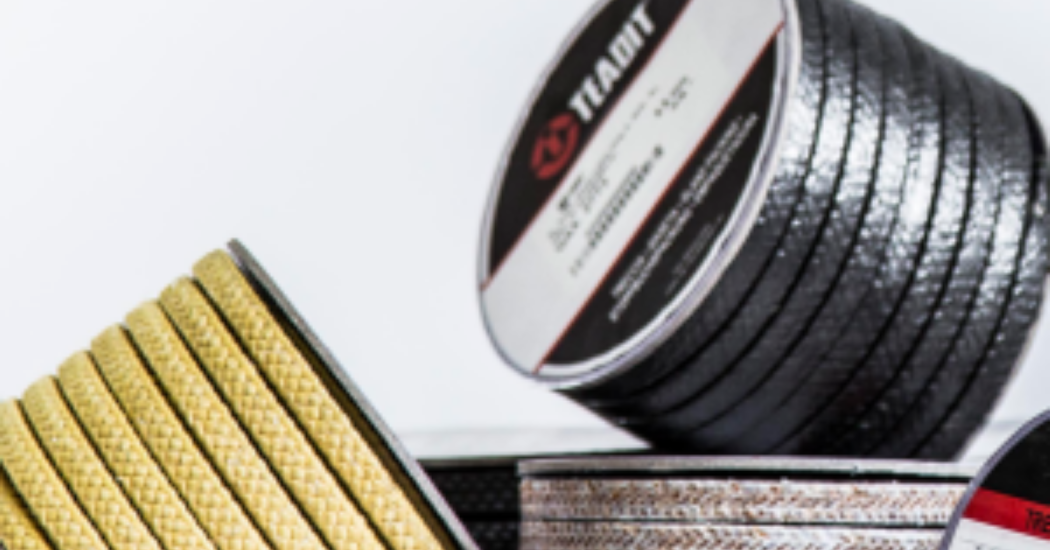
Pump performance begins with sealing reliability. Compression packing plays a critical role in maintaining efficiency, safety, and equipment longevity, particularly in pumps operating in slurry, abrasive, and chemically aggressive environments.
While mechanical seals are widely used, compression packing remains essential in demanding services where solids, abrasives, and variable operating conditions challenge sealing systems.
Key understanding:
- Packing seals the rotating shaft in the stuffing box.
- It mitigates leakage while supporting lubrication and heat dissipation.
- It remains a preferred solution for severe service pumps.
Packing is not a legacy solution. It is a purpose-built sealing technology for harsh pump applications.
Understand How Packing Actually Works
Compression packing for rotatory equipment does not create a hermetic seal. Instead, it controls dripping to maintain lubrication and cooling of rotating components.
Why controlled dripping is necessary:
- Provides lubrication between shaft and packing.
- Dissipates heat generated by friction.
- Reduces wear on moving components.
Lubrication may be supplied in two ways:
- Directly from the process media.
- Through injection using a lantern ring system.
Effective packing performance depends on balancing dripping control, lubrication, packing stress, and thermal management.
Select Packing Based on Real Service Conditions
Material selection is the most important factor in long-term performance, especially in slurry and aggressive media. Material selection must always consider temperature, pressure, and chemical compatibility.
In abrasive service, particles in the media wear against the packing ring surfaces, increasing friction and generating heat. Over time, this causes the packing to harden and become brittle, reducing its sealing capability.
Material selection guide:
- Graphite and carbon packing – Suitable for high temperatures and heat dissipation.
- Aramid or phenolic fiber packing – Provide mechanical resistance in abrasive slurry services.
- PTFE packing – Offers chemical resistance in aggressive media.
In demanding services, combining materials often delivers better performance. For example, phenolic fiber provides strength while graphite improves heat dissipation. Packing must be selected to address abrasion, temperature, and chemical exposure simultaneously.
Installation Determines Whether Packing Succeeds or Fails
Even correctly selected packing can fail if the installation is poorly executed. For example, misalignment causes uneven wear, overheating, and deformation of packing rings. Regular inspection of the shaft and stuffing box condition is essential.
Likewise, rough or uneven surfaces accelerate wear and compromise seal integrity. Shaft hardness, roughness and tolerances must remain within acceptable limits.
For ring seating and load distribution:
- Rings must be seated correctly.
- The gland follower must allow adjustment as wear occurs.
- Uneven pressure allows slurry intrusion and premature failure.
Many packing failures originate from installation and maintenance rather than material limitations. Routine maintenance, such as retightening after time and replacing worn packing rings can prolong the lifespan of the pump.
Avoid Common Misconceptions
Misunderstandings often reduce packing performance. Understanding packing behavior improves reliability and prevents premature failure.
Misconception 1. Packing materials are interchangeable
Incorrect materials reduce efficiency and increase downtime. For example, acrylic packing wears rapidly when exposed to abrasive media.
Misconception 2. Packing should completely eliminate leakage in Pumps
For pumps, slight leakage is required for lubrication and cooling. Eliminating leakage increases friction and overheating. In applications where the process media is not suitable for lubrication, such as chemically aggressive or abrasive fluids, flush water can be introduced through a lantern ring to provide the necessary cooling and lubrication.
Final Optimization Checklist for Engineers
Selection: Match materials to temperature, pressure, chemistry, and abrasiveness.
Installation: Verify alignment, surface condition, ring seating, and load distribution.
Lubrication: Use a correct lubrication strategy and lantern ring placement.
Maintenance: Expect controlled dripping and perform routine adjustments.
By following this checklist, operators may experience reduced downtime, improved efficiency, and extended equipment life.
Compression packing remains a critical sealing solution for pumps operating in slurry, chemical, and high-temperature environments. When properly selected, installed, lubricated, and maintained, packing systems improve reliability, extend equipment life, and support efficient pump operation. To learn more, read the full article!