Five Sealing Predictions for Waste Heat Recovery
Why gasket selection will play a greater role in industrial energy efficiency As refining, petrochemical, and chemical processing facilities prioritize energy efficiency, heat recovery systems will play a greater role…
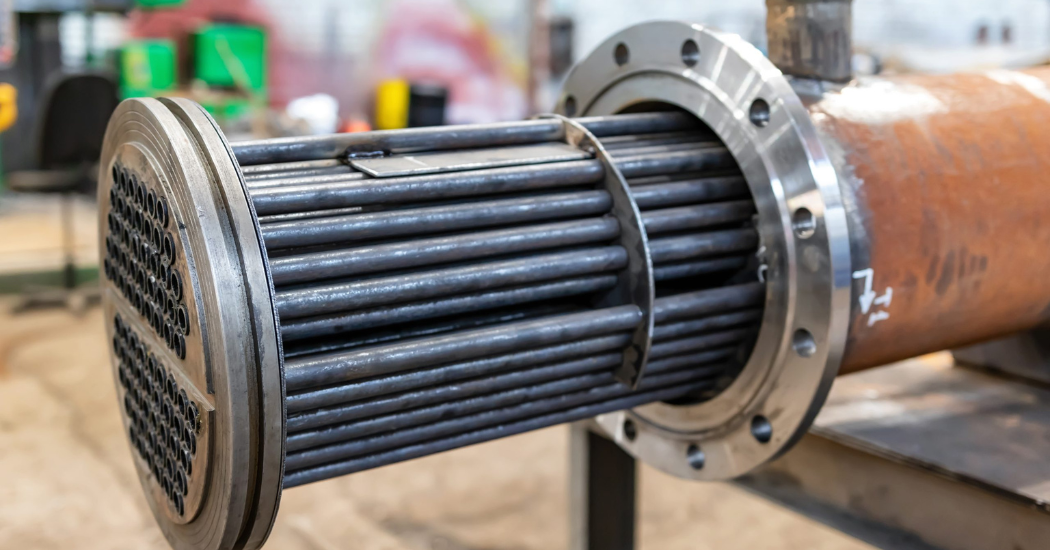
Why gasket selection will play a greater role in industrial energy efficiency
As refining, petrochemical, and chemical processing facilities prioritize energy efficiency, heat recovery systems will play a greater role in reducing fuel consumption and emissions. Their success, however, will depend partly on an often-overlooked component: the gasket.
Here are five predictions for how sealing will influence waste heat recovery performance.
1. Gasket selection will become an energy decision
Leaks, pressure drops, and fugitive emissions reduce thermal efficiency and force plants to use more fuel or operate auxiliary systems harder.
Gasket selection will increasingly be evaluated according to its ability to conserve energy, maintain pressure, reduce emissions, and extend maintenance intervals.
2. Thermal cycling will drive material selection
High temperatures accelerate gasket creep and relaxation, while pressure fluctuations, thermal expansion, vibration, and corrosive condensates increase the risk of leakage.
Materials with strong creep resistance, recovery, chemical compatibility, and mechanical stability will become essential for maintaining reliable seals under changing conditions.
3. Multi-material strategies will become standard
No single gasket material meets every requirement within a heat recovery network. Facilities will increasingly match materials to specific services:
- Expanded PTFE for chemical compatibility and fragile flanges
- Restructured PTFE has good creep resistance and ideal for low bolt load flanges
- Compressed fiber for moderate to high pressures and temperatures
- Flexible graphite for high-temperature steam, hydrocarbons, and fire safe applications oxidizing gases
- Metallic and semi-metallic gaskets for extreme pressures, temperatures, vibration, thermal cycling
This approach can improve reliability across the entire system.
4. Sealing reliability will determine whether energy targets are achieved
A Gulf Coast petrochemical facility expanded its waste heat recovery network with projected fuel savings of 5–7%. Early commissioning revealed flange leakage in thermally cycled units.
Following a TEADIT® survey, the plant adopted:
- Spiral wound gaskets with oxidation-inhibited graphite for high-temperature headers
- Tealon® restructured PTFE for condensate return flanges
- Expanded PTFE for corroded and fragile flanges
The facility achieved a leak-free startup, estimated annual fuel savings of 25,000 MMBtu, and a reduction of more than 1,000 metric tons of carbon dioxide emissions.
5. Sealing support will extend beyond the gasket
Reliable performance requires more than material selection. Bolted joint analysis, testing, installation training, and post-installation monitoring will become increasingly important for maintaining long-term integrity.
TEADIT® supports this approach with expanded PTFE, restructured PTFE, compressed fiber, graphite, metallic, and semi-metallic gasket technologies backed by API, ASME, and EN testing.
The Outlook
Heat recovery systems can only conserve energy when they remain sealed and reliable. A single gasket failure can undermine a significant efficiency investment, while an engineered sealing strategy can help reduce energy loss, emissions, downtime, and safety risks.
Contact a TEADIT® sealing specialist to discuss how application-specific gasket selection can support the performance of your heat recovery assets. Read the full article.