How to Prevent Gasket Relaxation Before It Causes Costly Leaks
Bolted flanged joint failures rarely happen because of a single mistake. More often, they develop as gasket materials relax, bolt loads decrease, and sealing stress is gradually lost.
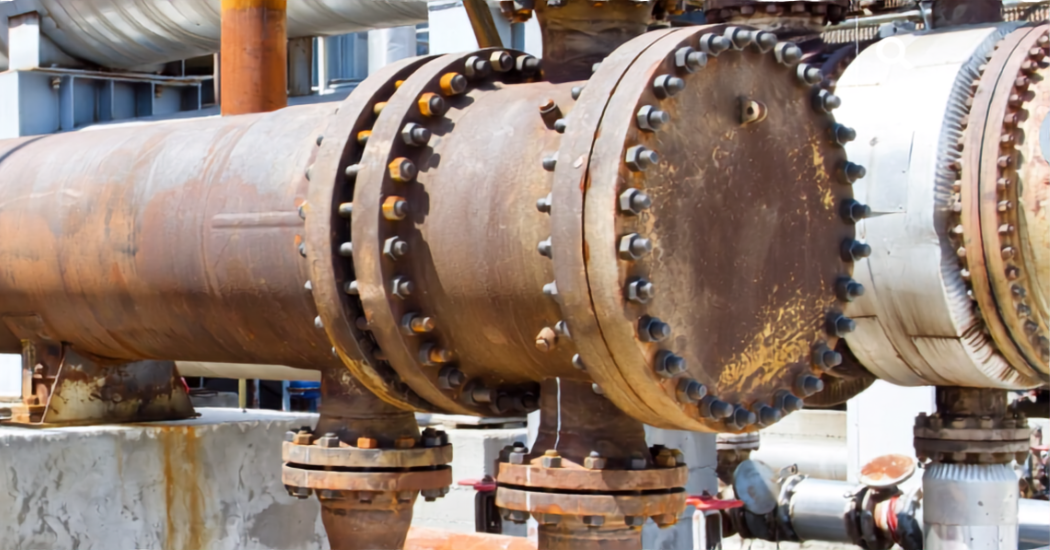
Bolted flanged joint failures rarely happen because of a single mistake. More often, they develop as gasket materials relax, bolt loads decrease, and sealing stress is gradually lost.
Understanding when relaxation occurs and how to respond can significantly improve reliability, reduce downtime, and extend equipment life.
Step 1: Understand What Gasket Relaxation Really Is
Gasket relaxation is the time-dependent reduction in gasket stress under compression. In a bolted joint, gasket creep, and relaxation can reduce bolt preload and the stress remaining on the gasket, increasing the likelihood of leakage.
Not all gasket materials behave the same way.
- PTFE sheet gaskets experience measurable relaxation at ambient temperatures.
- Spiral wound and kammprofile gaskets are generally less susceptible to gasket relaxation under comparable conditions.
- At elevated temperatures above 500°F (260°C), bolt relaxation becomes the dominant concern, regardless of gasket style.
What this means: Relaxation is expected. Ignoring it is what creates sealing problems.
Step 2: Choose the Right Gasket Material
Material selection has a direct impact on long-term sealing performance.
PTFE Gaskets
Best for chemical resistance but performance varies by construction.
- Virgin or skived PTFE has higher creep and stress relaxation even at room temperature.
- Restructured PTFE (rPTFE) offers improved strength and reduced creep.
- Expanded PTFE (ePTFE) provides excellent flexibility and conformability with improved stress retention.
Semi-metallic Gaskets
Spiral wound and kammprofile gaskets generally retain bolt load more effectively and experience minimal relaxation.
When selecting a gasket, evaluate:
- Operating temperature
- Pressure
- Chemical compatibility
- Thermal cycling
- Vibration
- Expected flange movement
- Available bolt load and flange rigidity
- Gasket seating and operating stress limits
Step 3: Consider Dwell Time
After tightening a gasketed flange, gasket materials immediately begin settling.
Allowing a short dwell time before performing a check pass lets the gasket stabilize before restoring lost preload.
Recent testing shows:
- Fifteen minutes often captures most of the benefit for PTFE gaskets.
- Waiting a longer period, for example four or even twenty-four hours, may provide only marginal additional improvement.
- Semi-metallic gaskets often show little advantage from extended dwell times.
What this means: Longer is not always better.
Step 4: Apply Torque Correctly
Even the best gasket cannot compensate for poor assembly practices.
Follow an approved joint-assembly procedure by:
- Selecting and properly applying bolt lubricant for the application
- Using a calibrated torque wrench or other approved tensioning method
- Applying torque in an approved multipass sequence (e.g. star-pattern)
- Finishing with a circular pass
- Performing a check pass after dwell time
Consistent bolt loading creates more uniform gasket compression and improves sealing reliability.
Step 5: Know When Retorque Is Needed
Many people assume every flange requires the same installation schedule. It does not. Two common maintenance procedures include:
Check Pass
Performed at ambient temperature after a short dwell period to restore preload lost during initial gasket seating.
Teadit Live Loading
In applications with elevated temperatures or high thermal cycling, the use of live loading systems is recommended to mitigate the effects of relaxation and bolt load losses, maintaining the preset bolt load.
Step 6: Let Material Performance Guide Your Maintenance Strategy
Testing of multiple gasket materials revealed important differences.
Semi-metallic Gaskets
- Very low bolt-stress loss
- Marginal benefit from delayed retorque
- Excellent long-term load retention
Expanded PTFE
- Significant improvement with a retorque after only 15 minutes
- Longer dwell times provide smaller gains
Restructured PTFE
- Similar behavior to expanded PTFE
- Most bolt stress recovery occurs with a check pass within the first hour
Skived PTFE
- Highest stress relaxation
- Greater long-term preload loss
- Less suitable for demanding sealing applications
The conclusion is simple: Different gasket materials require different assembly and retorque strategies.
Final Thoughts
Reliable bolted flange joints depend on much more than achieving the correct torque value. Long-term performance requires understanding gasket relaxation, selecting materials based on operating conditions, applying proper assembly techniques, and using material-specific retorque practices. A data-driven approach helps reduce leaks, improve equipment reliability, and minimize unnecessary downtime.
To learn more about preventing leaks from gasket relaxation, read the full article.