Did You Know? Smarter Packing Selection Leads to Reliable Sealing
Did you know that compression packing is a critical sealing element used to prevent leakage, reduce fugitive emissions, and maintain safety and efficiency across industrial equipment?
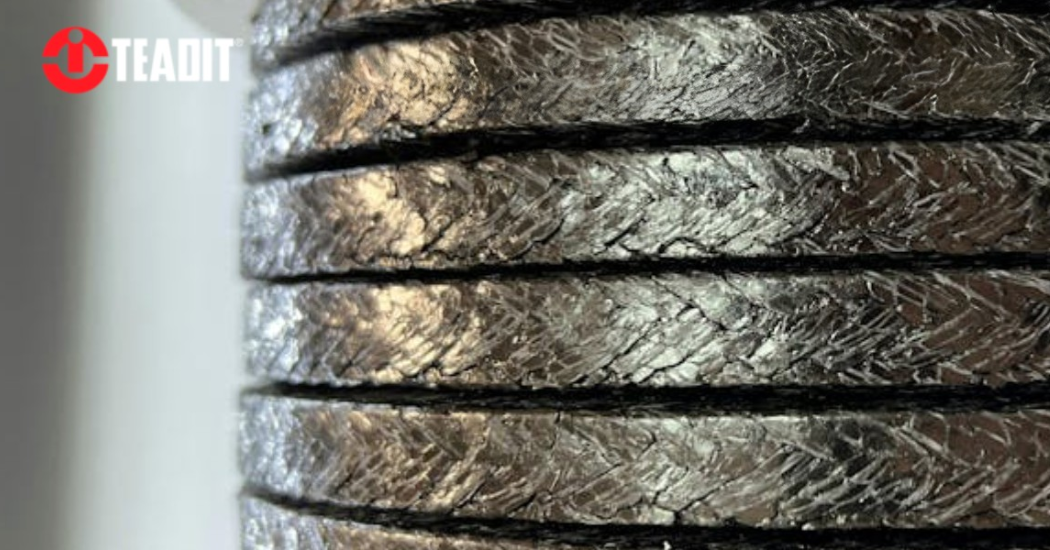
Did you know that compression packing is a critical sealing element used to prevent leakage, reduce fugitive emissions, and maintain safety and efficiency across industrial equipment? Improper selection or installation can quickly lead to failure, downtime, and increased maintenance.
Understanding the Application
Did you know that packing selection starts with identifying equipment motion?
- Dynamic applications involve continuous movement, such as pumps, mixers, and rotating equipment. These require packing that can handle friction, heat, and has abrasive resistance.
- Static applications involve little or intermittent movement, such as valves where sealing must withstand pressure, temperature changes, and chemical exposure.
Control valves deserve special attention because they may cycle frequently, even though stem travel is typically short and relatively slow.
Key Operating Factors
Did you know that four primary parameters determine packing performance?
- Temperature: Must account for both process heat and frictional heat in dynamic systems to avoid hardening or burnout.
- Pressure: Higher pressures, especially in valves, require greater gland load to maintain sealing integrity.
- Chemical compatibility: Packing materials must resist the process fluid, cleaning agents, and operating conditions to avoid swelling, embrittlement, contamination, or premature leakage.
- Shaft speed: In dynamic systems, higher speeds increase friction, wear, and heat generation.
Application-Specific Selection
Did you know that different services require different packing styles?
- General service: Synthetic yarns, graphite, or PTFE with encapsulated graphite
- Low-emission service: Reinforced flexible graphite-based packing
- Chemical service: Expanded PTFE
- High-temperature service: Oxidation-inhibited flexible graphite or reinforced flexible graphite packing
- Control valves: Low-friction flexible graphite packing with PTFE structure
- Abrasive service: Aramid or phenolic fiber packing
There is no universal solution. Each application requires careful evaluation of operating conditions.
Installation Is Critical
Did you know that even the best packing fails without proper installation?
Key practices include:
- Fully removing old packing and inspecting equipment
- Measuring correctly for proper fit
- Cutting rings individually with 45° joints
- Staggering joints and installing rings sequentially
- Applying correct torque and re-tightening after thermal cycles
Improper installation is a leading cause of leakage and premature failure.
Final Insight
Did you know that replacing packing with a “similar” product without reassessing conditions can impact performance? Proper material selection that matches actual service conditions can improve uptime and enhance safety.
To learn more about choosing the right packing for static and dynamic applications, read
the full article.