8 Engineering Insights on the Total Cost of Ownership
1. What is Total Cost of Ownership? The concept of total cost of ownership (TCO) centers on understanding the full impact of fugitive emissions on operators, OEMs, and surrounding communities.
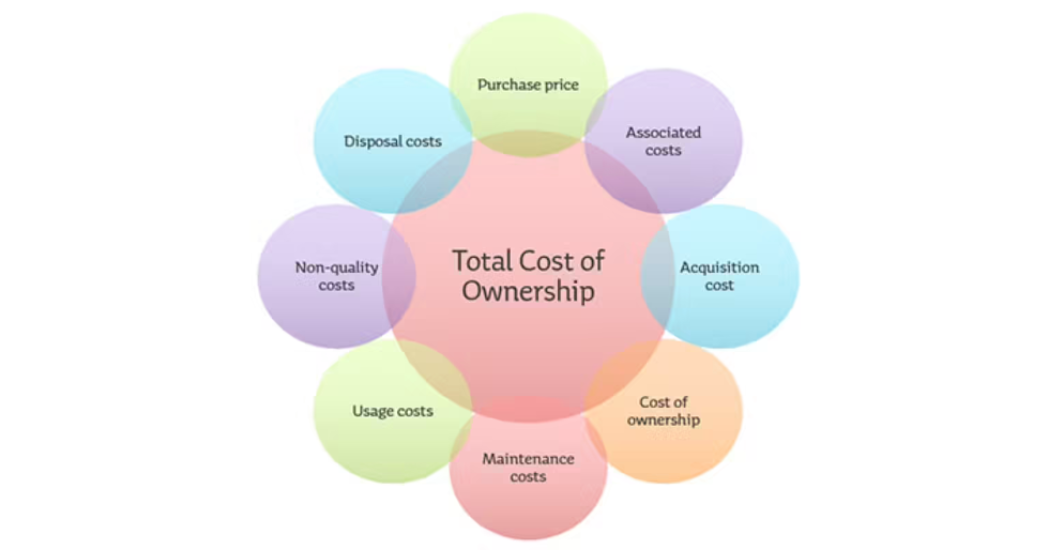
1. What is Total Cost of Ownership?
The concept of total cost of ownership (TCO) centers on understanding the full impact of fugitive emissions on operators, OEMs, and surrounding communities. Evaluating emissions through a TCO lens requires considering environmental, health, operational, and financial consequences together. Organizations that adopt best practices and advanced technologies can achieve measurable sustainability and financial gains.
2. Fugitive Emissions Losses
Fugitive emissions are unintended releases of gases from equipment such as valves, pumps, and connections. In refineries and chemical plants, these emissions can include methane, propane, benzene, ethylene oxide, vinyl chloride, and other volatile organic compounds (VOC’s).
Although these gases have short atmospheric lifespans, their environmental effects are long-lasting. At the same time, leaked products represent lost revenue and reduced production efficiency. Reducing emissions is therefore both an environmental responsibility and a financial necessity.
3. Global Strategies Demonstrate the Value of Combined Approaches
Efforts to control fugitive emissions date back to research conducted in Los Angeles in the 1950s, which showed that numerous small leaks collectively caused severe air pollution. Since then, different regions have taken different approaches.
Europe has traditionally focused on engineering solutions, while the United States emphasized regulation. California demonstrated the long term effectiveness of strict work practices. China has adopted a combined strategy of engineering improvements and regulation, resulting in faster emission reductions.
This dual approach highlights the effectiveness of combining design improvements with operational discipline.
4. Low Emission Technologies Benefits
Investments in emission reduction technologies provide measurable value in multiple areas:
- Community and environmental stewardship: Improved air quality, enhanced public health, and stronger corporate reputation, particularly near residential areas and schools.
- Maintenance and operational efficiency: Advanced sealing technologies and improved monitoring reduce maintenance frequency and operational disruptions.
- Direct cost savings: Reduced product loss leads to recovery of valuable materials and lower processing costs.
A strategic approach requires identifying the components most likely to leak and prioritize upgrades.
5. Advanced Detection Technologies
Infrared and optical gas imaging cameras can detect leaks that conventional monitoring may miss between maintenance cycles. Earlier detection enables faster repairs, reducing both emissions and product loss.
Certified low leak valve packing can reduce fugitive emissions to near zero while simultaneously lowering operating costs.
6. Impact of Modern Packing Innovations
Over the past decade, improvements in low-emission packing have been driven by API 622 testing requirements. These advancements enable near-zero emissions performance.
Engineers should request detailed testing data to verify performance and ensure optimal product selection.
7. Repacking Existing Valves Can Deliver Major Performance Gains
Replacing entire valve systems is not always necessary. In our API 624 testing, repacking existing valves with low-emissions packing has achieved results as low as ~6 ppm, well below the standard’s acceptance limit.
However, not all low emission products perform equally, even when meeting minimum API requirements. Careful product selection and correct installation remain critical.
8. API Standards Provide a Framework for Long Term Value
API 622, API 624, and API 641 provide widely used low-emissions benchmarks:
API 622 qualifies valve packing, API 624 evaluates rising-stem valves with low-emissions packing, and API 641 covers quarter-turn valves. While not mandatory for all facilities, adopting components that meet these standards offers significant advantages.
The cost difference between standard and low emission components is often minimal, yet the benefits include reduced emissions, reduced product loss, and improved regulatory compliance.
Facilities can strengthen performance by specifying compliant components in Approved Manufacturer Lists.
Strategic Investments
Evaluating fugitive emissions through total cost of ownership encourages data driven decisions. Implementing best available technologies, such as TEADIT’s 2848 compression packing, and adhering to strict standards enable organizations to reduce emissions, improve financial performance, and meet stakeholder expectations while supporting long-term sustainability.
To learn more about how high quality sealing solutions can reduce your total cost of ownership read the full article!