The 5 Most Sustainable Cities In The US
In honor of Earth Day 2021, Rocket Homes recognized the country’s most eco-friendly cities and initiatives they’ve created to reduce their carbon footprint and try to reverse the effects of…
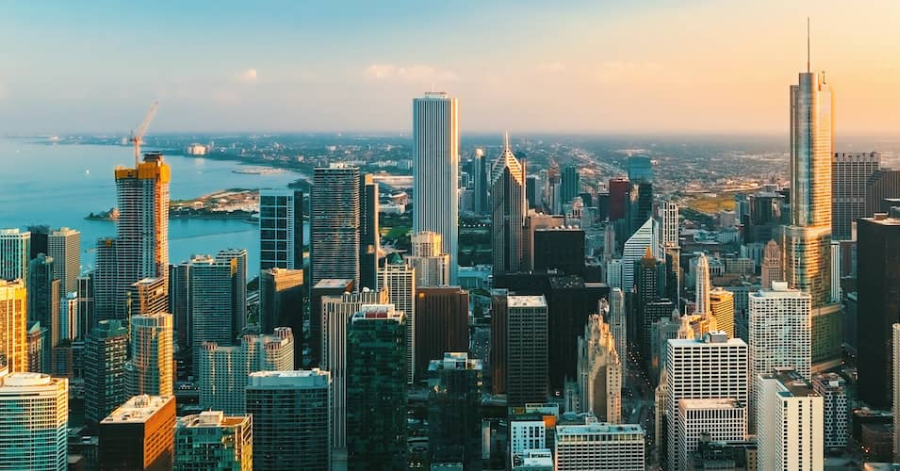
In honor of Earth Day 2021, Rocket Homes recognized the country’s most eco-friendly cities and initiatives they’ve created to reduce their carbon footprint and try to reverse the effects of global warming. Take a look at the 5 most sustainable cities that are leading the effort to preserve our planet for generations to come.

1. Portland, Oregon
Metro population: 2,492,412
Percent of renewable energy: 49.1%
Square feet of green space per person: 472.5
Percent of energy-efficient commuters: 19.6%
Portland is a city revered for its eco-consciousness. It is in the top 1% of the country for the power they generate from renewable sources. One of their largest energy efficiency projects to date has been converting 45,000 streetlights to use LED technology. Now, the city’s streetlights and traffic signals use 66% less energy than they did back in 2006, and Portland saves $1.5 million annually. Through its recycling and composting efforts, Portland recovers 81% of all waste produced by city operations and is on track to recover up to 90% by the year 2030.

2. Seattle, Washington
Metro population: 3,074,865
Percent of renewable energy: 46%
Square feet of green space per person: 325.1
Percent of energy-efficient commuters: 24.2%
Seattle may be known as the Emerald City because of its year-round greenery, but the nickname can be seen as even more appropriate given the city’s extensive green efforts. Seattle is home to the nation’s first carbon-neutral utility company, Seattle City Light. Because of the company’s hydroelectric dams, the city ranks in the top 2% of the country for renewable energy. While Amazon plans to achieve net-zero carbon emissions by 2040, Microsoft has set its sights on becoming carbon negative by 2030.

3. St. Paul, Minnesota
Metro population: 3,654,908
Percent of renewable energy: 15.8%
Square feet of green space per person: 729.8
Percent of energy-efficient commuters: 13.7%
Although the state of Minnesota has committed to reducing greenhouse gas emissions 80% by 2050, St. Paul has taken their efforts a step further, planning to achieve carbon neutrality by the same time. As part of its strategy, the city has turned its attention toward large buildings, as their energy use makes up 40% of St. Paul’s emissions. To help ensure Minnesota’s capital achieves its goal, the city now requires owners of these buildings to track and report their energy and water use.

4. San Diego, California
Metro population: 3,338,330
Percent of renewable energy: 14.5%
Square feet of green space per person: 483.3
Percent of energy-efficient commuters: 13.6%
San Diego has found a way to help combat California’s increasingly frequent droughts. Through the Claude “Bud” Lewis Carlsbad Desalination Plant, the area has been able to use reverse osmosis to transform ocean water into viable drinking water. The plant processes 100 million gallons of salt water each day, providing San Diegans with 50 million gallons of potable water. While this new technology does increase greenhouse gas emissions, the city has still managed to decrease emissions by 25% in just under a decade.

5. Washington, D.C.
Metro population: 4,956,991
Percent of renewable energy: 40.2%
Square feet of green space per person: 383.2
Percent of energy-efficient commuters: 24.5%
D.C. is in the top 2% of the country for LEED-certified buildings. In the last decade, D.C. public schools have led the way in energy-efficient construction. As the U.S. capital continues to reduce greenhouse gas emissions, the city is now working toward creating net-zero energy schools that produce as much energy as they consume. D.C has also invested in using wind and solar power to generate energy for municipal and residential buildings, which has helped push the city into the top 3% of the country for renewable energy.
Methodology: Finding The Greenest Cities In The US
This study examined the greenest cities in the U.S. by analyzing the 60 largest metropolitan areas in the United States. These 60 places have a population of 1 million or greater and are home to 51% of all U.S. residents.
Each data metric was normalized and transformed to a common range of 0-100 for the purposes of scoring and comparison. Weights were applied to each metric to reflect its level of importance in the study. The weighted scores for each metric were then summed and sorted to produce the final Earth Day rankings.
Original article published on Rocket Homes.
Metric | Weight | Level | Source |
LEED buildings – square feet per capita | 21% | City | U.S. Green Building Council |
Green commute | 11% | City | American Community Survey – U.S. Census Bureau |
Green Space – square feet per capita | 21% | City | ESRI Inc. |
Car ownership – average per household | 5% | City | American Community Survey – U.S. Census Bureau |
Percent of renewable energy | 21% | State | U.S. Energy Information Administration |
Electric vehicles per capita | 5% | State | National Renewable Energy Laboratory (NREL) |
State beverage container deposit laws | 5% | State | National Conference of State Legislatures |
Battery collections – ranking of batteries recycled per capita | 3% | State | Call2Recycle.org |
Batter recycling legislation | 3% | State | Call2Recycle.org |
Composting regulations | 5% | State | U.S. Composting Council |