Inside the Taco Lubbock Facility: Building the Custom Mechanical Skids Powering Tomorrow’s Infrastructure
As industrial projects become larger, more complex, and increasingly schedule-driven, equipment manufacturers are facing a new reality: customers no longer have the luxury of waiting.
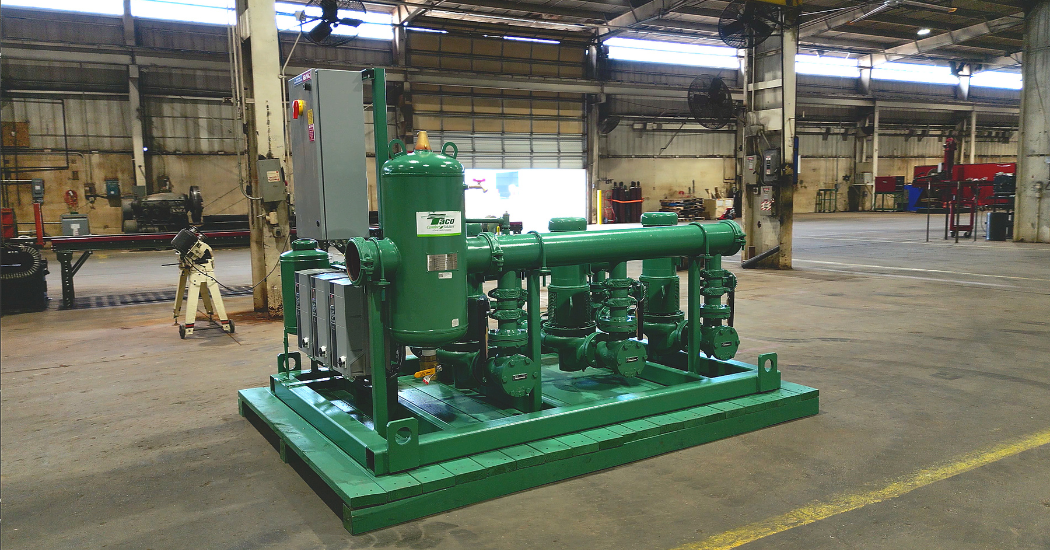
As industrial projects become larger, more complex, and increasingly schedule-driven, equipment manufacturers are facing a new reality: customers no longer have the luxury of waiting. Whether supporting data centers, commercial buildings, municipalities, or industrial facilities, the demand is shifting toward engineered systems that can be delivered faster without sacrificing quality.
Your browser does not support the video player.
That is exactly what is driving growth at the Taco mechanical skid manufacturing facility in Lubbock, Texas.
In a recent conversation with Ric Turmel, SVP of Engineered Building Solutions at Taco, we discussed how the company’s investment in custom fabrication, engineering, and workforce development is positioning it to meet the next generation of infrastructure demands.

More Than an Assembly Shop
Many companies describe themselves as skid manufacturers. Taco approaches the process differently. Rather than purchasing pre-manufactured components and assembling them into a package, the Lubbock operation manufactures nearly every major component in-house.
“We’re building the tanks, manufacturing the heat exchangers, producing the pumps, and fabricating the skid,” Turmel explained. “That gives us complete control over quality, scheduling, and performance.”
This vertically integrated approach allows Taco to deliver fully engineered mechanical skid systems tailored to each customer’s application. Every project leaving the facility is custom designed, whether it supports HVAC systems, municipal infrastructure, industrial processes, agriculture, or emerging data center cooling applications.

Why Lubbock?
Location matters in manufacturing, and Taco selected Lubbock for more than just available space. The facility has grown to nearly 100,000 square feet, with plans to expand as demand continues to increase.
Its location offers several strategic advantages. The facility sits adjacent to a major steel supplier, simplifying access to Buy America-compliant materials while reducing transportation time and cost. Nearby manufacturers strengthen the regional supply chain, creating efficiencies for specialized pump production.
Equally important is access to talent. With Texas Tech University and several local trade schools nearby, Taco has developed a strong pipeline of engineers, welders, fabricators, and skilled tradespeople.

“In the end, it’s about the people,” Turmel said. “The craftsmanship of our welders and fabricators is what really differentiates these systems.”
Engineering for Speed
One of the biggest changes Turmel sees across the industry is the shrinking timeline between project announcement and equipment delivery. Large infrastructure projects that once allowed months of planning are now expected to move almost immediately.
Data centers are a prime example. As artificial intelligence, cloud computing, and digital infrastructure continue expanding, cooling systems have become one of the most critical pieces of every facility. Owners want proven designs delivered as quickly as possible.
Turmel described situations where engineering teams receive requests for multi-megawatt facilities with completion deadlines only months away. That creates enormous pressure throughout the manufacturing process.
Engineering must finalize designs rapidly. Materials with long procurement cycles must be secured before shortages occur. Manufacturing teams must organize hundreds of components while maintaining quality standards. And everything has to arrive on-site ready for installation.
These compressed schedules require manufacturers to think differently. Instead of simply responding to demand, they must anticipate it.
When One Design Becomes Hundreds
Another unique challenge emerging in the data center market is replication. Once a cooling system design proves successful, owners frequently duplicate it across multiple facilities. What begins as one custom project can quickly become dozens.
Turmel shared an example involving a booster skid application supporting water storage tanks. After several nearly identical projects were already underway, the team realized additional installations would likely follow using the same engineering design. That meant identifying the original engineer of record, understanding the complete application, and preparing for future demand before new purchase orders even arrived.
It’s a shift from project-based thinking to platform-based manufacturing. The ability to recognize repeat opportunities early can dramatically improve planning for engineering, inventory, and production.
Standardization Is Changing the Industry
As the scale of data centers continues growing, standardization is becoming increasingly important. Rather than designing every project from scratch, major chiller manufacturers are moving toward standardized cooling platforms measured in megawatts and even gigawatts.
Taco is actively collaborating with both chiller manufacturers and major data center developers to ensure its mechanical skid solutions align with these evolving standards. This level of collaboration would have been difficult only a few years ago.
Historically, confidentiality agreements limited communication across organizations. Today, manufacturers are working directly with some of the world’s largest technology companies and equipment suppliers much earlier in the design process. That visibility helps everyone prepare for future production needs while reducing uncertainty throughout the supply chain.
Building for the Future
Growth at the Lubbock facility has been intentional. Rather than expanding too quickly, Taco follows what Turmel describes as a “crawl, walk, run” philosophy. The goal is to build manufacturing capacity alongside customer demand instead of getting ahead of the market.
Facility expansion, additional equipment, and workforce development are all being added strategically to ensure sustainable growth. It is an approach that reflects long-term thinking rather than short-term volume.

Delivering Complete Solutions
Beyond manufacturing individual components, Taco excels at delivering complete engineered systems. Mechanical skids arrive preassembled, tested, and organized for efficient installation in the field. That reduces on-site welding, minimizes installation risk, shortens project schedules, and improves quality control.
For contractors working inside crowded mechanical rooms or owners trying to accelerate commissioning, those advantages can significantly impact overall project success. As industrial facilities continue growing in complexity, factory-built systems provide greater consistency while allowing field teams to focus on installation rather than fabrication.

Looking Ahead
The future of mechanical skid manufacturing extends well beyond fabrication. Engineering innovation, digital collaboration, supply chain visibility, AI-assisted planning, and standardized system design are all becoming part of the equation.
For Taco, success will continue to depend on two things: investing in world-class facilities and empowering the skilled people who transform steel and engineering into reliable, high-performance systems.
As demand accelerates across HVAC, industrial markets, and the rapidly expanding data center sector, manufacturers capable of combining custom engineering with scalable production will be well positioned for the future.
And in Lubbock, Texas, Taco is building exactly that foundation.
Your Reputation Is Our Business.
Let’s Build Together.
Planning a custom mechanical skid project? Connect with Taco engineers to discuss your application and requirements.